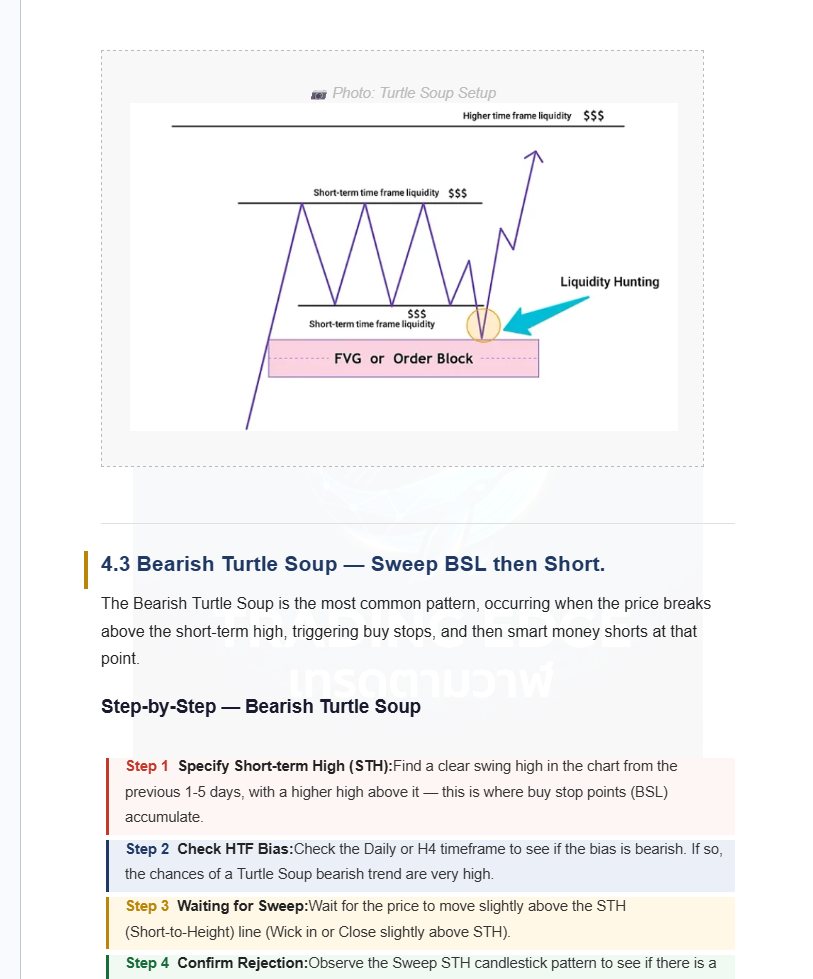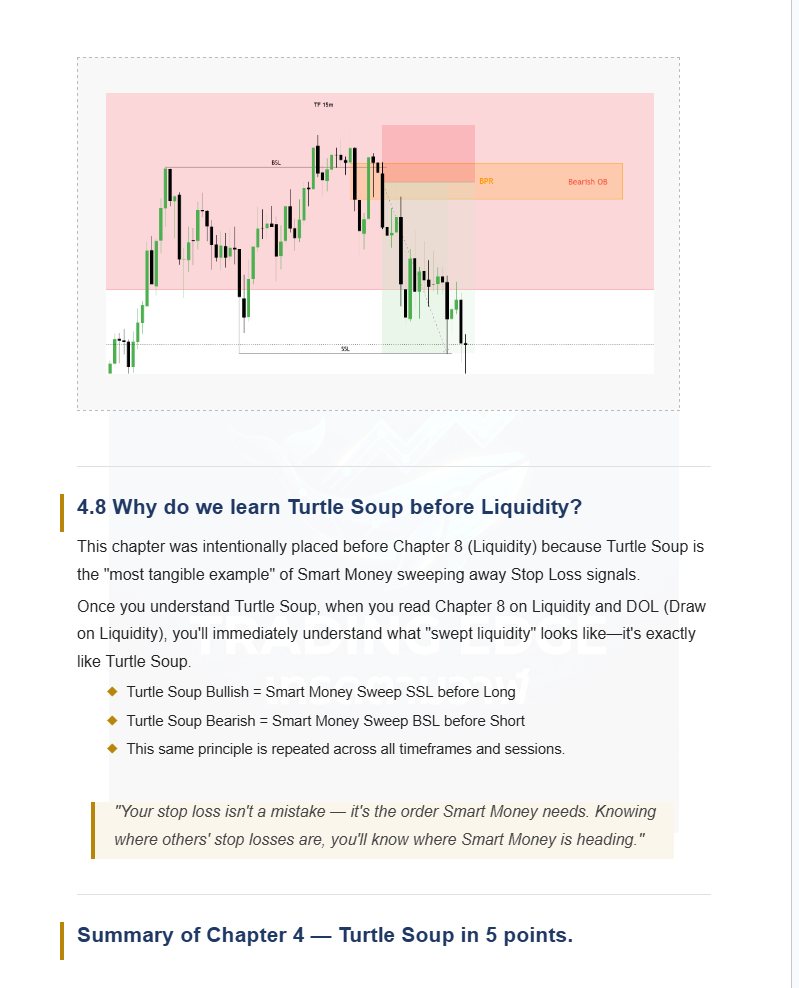
Daily bias is the skill that separates pros from beginners — a step-by-step PDH/PDL framework: mark the levels, read the daily close, catch the sweep-and-reclaim. Plus the 6-pattern reference table (bullish, bearish, sweep, consolidation).
Right setup, wrong side = still a loss. Daily bias is the process of calling the direction the market is *most likely* to take today — bullish or bearish — before the first trade.
This is the practical framework: just two levels (PDH/PDL) plus the daily close — simple, tested, repeatable every single day.
What daily bias is — and why it matters
Daily bias = identifying the day's most likely direction using key levels and market structure.
Three benefits: • Aligns your trades with trend and momentum • Forces you onto one side of the market — kills hesitation • Makes execution disciplined, because counter-bias setups get filtered out
Straight warning: it is a practical, well-tested framework — but like every model, it fails in certain conditions (see the FAQ).
Step 1 — Mark PDH/PDL
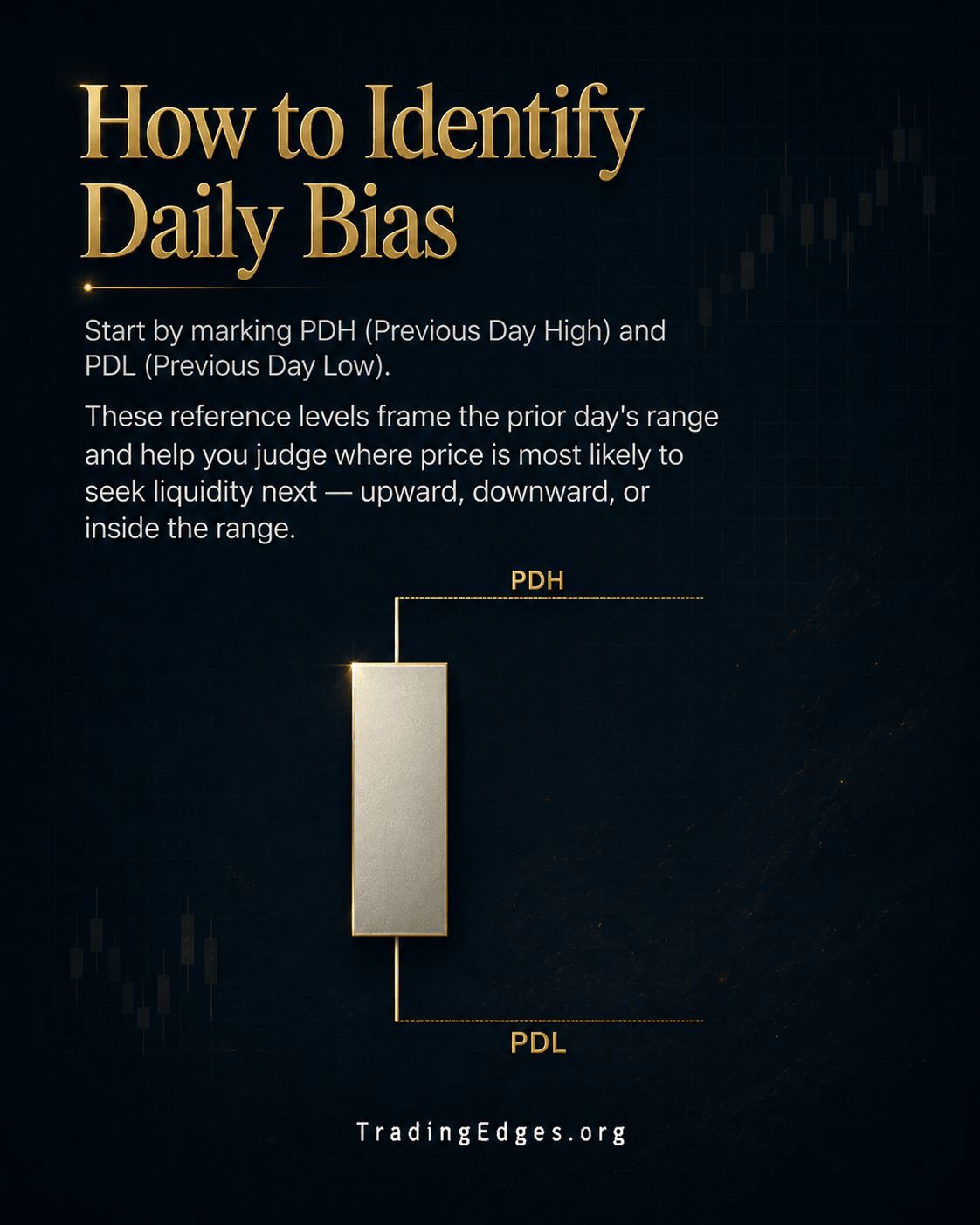
Start by marking the PDH (Previous Day High) and PDL (Previous Day Low).
These two lines frame yesterday's liquidity — and answer the only question that matters: "Where is price most likely to seek liquidity today — up, down, or inside the range?"
(Building on the 4 daily liquidity levels — PDH/PDL is level #4 there.)
Step 2 — A strong close = bias with the move
Watch how the daily candle closes relative to PDH/PDL:
If price closes strong above the PDH (confirming continuation) → next day's bias = bullish.
Then wait for an early dip that reclaims the day's opening level — that reclaim is the entry condition. Target: the next liquidity above.

Step 3 — Sweep and close back = bias against the move
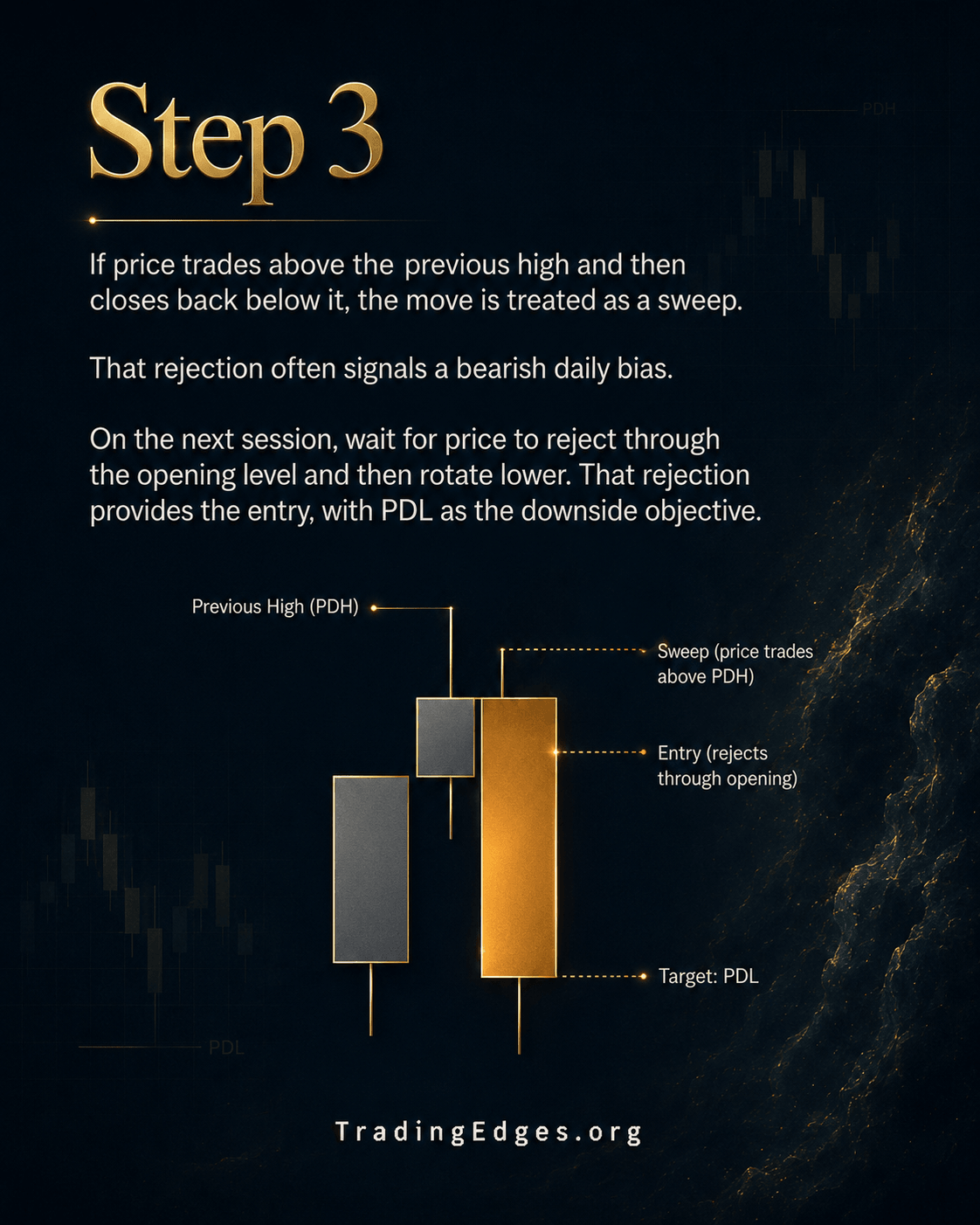
The opposite case: price trades above the PDH but closes back below it = a sweep (liquidity taken, no continuation).
Sweep + close back = bearish bias for the next day. Wait for price to reject through the opening level and rotate lower — the rejection is the entry, the PDL is the objective.
This is the same pattern driving the Judas Swing and Turtle Soup — the sweep is one language across all of ICT.
The 6-pattern reference — one image to remember
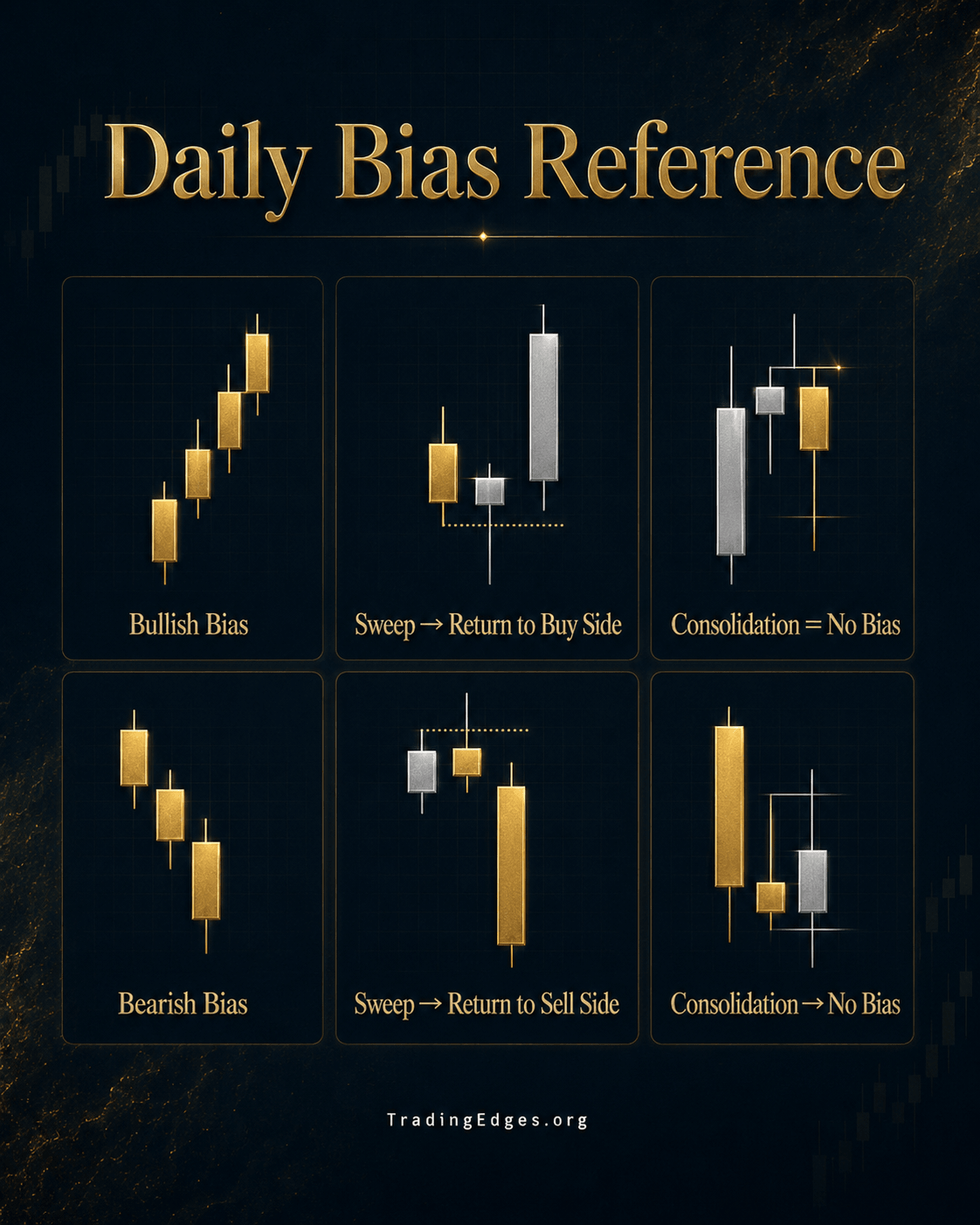
Every case in one table:
Top row (bullish side): • Bullish Bias — structure continuing up • Sweep → Return to Buy Side — swept down, reclaimed up • Consolidation = No Bias — stand aside
Bottom row (bearish side): • Bearish Bias — structure continuing down • Sweep → Return to Sell Side — swept up, rejected down • Consolidation → No Bias
Iron rule: no bias = no trade. Consolidation days are the days pros simply watch.
Open through TradingEdge — up to $12/lot rebate + Whale Points on every lot traded
คำถามที่พบบ่อย
How often is daily bias wrong — when does the framework fail?+
It can fail, and you should accept that upfront. Common failure modes: (1) consolidation days with no clear structure — the reference table literally says No Bias, stand aside; (2) major news days (FOMC/NFP) where the number, not structure, sets direction; (3) Friday afternoons when volume dries up. The discipline is admitting "I don't know" on some days instead of forcing a guess.
What time should I read the bias?+
The daily candle closes at 5:00 PM New York. Read the close, mark PDH/PDL, plan one side of the market, then wait for your setup in the London or New York killzone the next day.
Do I need any indicators?+
No — this framework uses two horizontal lines (PDH/PDL) and a naked read of the daily close. If you want a helper, a session-boxes indicator makes the Asia/London/NY ranges easier to see, which helps when combining bias with the Judas Swing and Killzones.
- Michael J. Huddleston (ICT) — Daily Bias & draw on liquidity mentorship
- TradingEdges ICT Concept Playbook — 500 pages