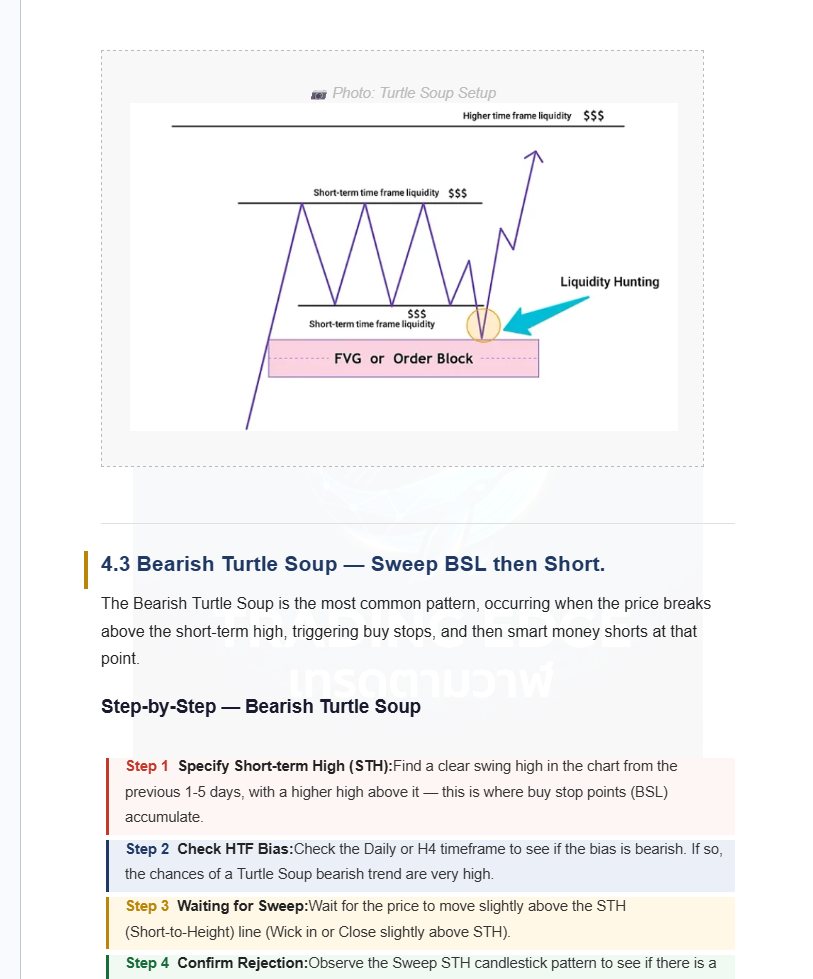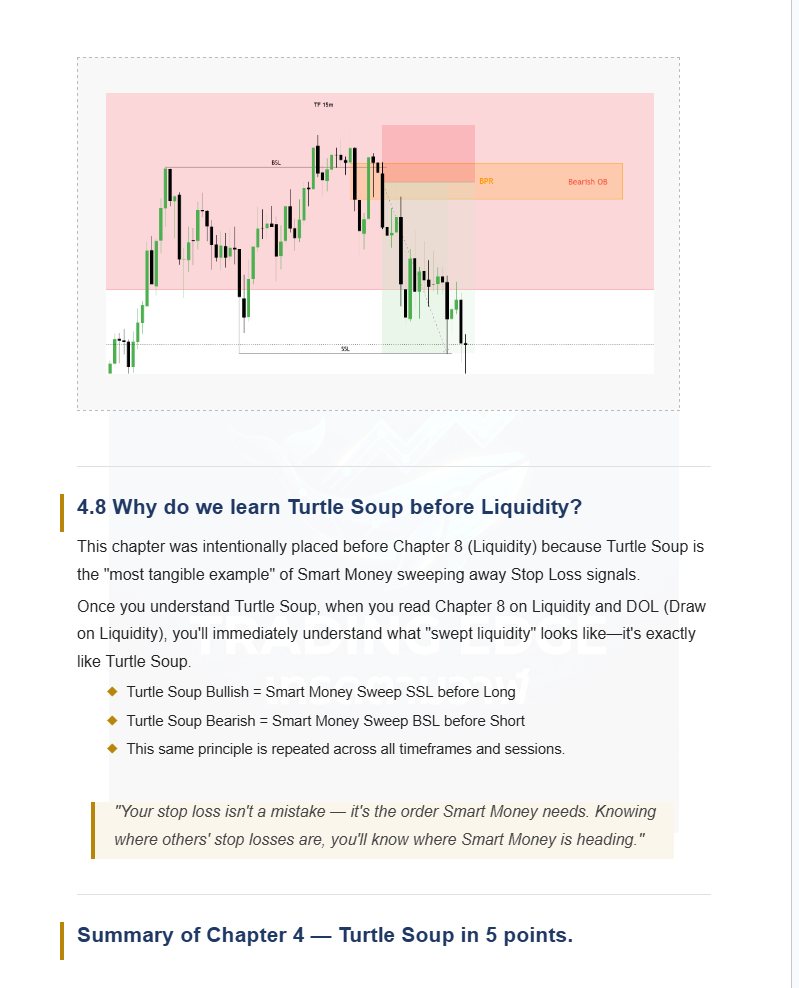
Every ICT imbalance in one map — Fair Value Gap, Volume Imbalance, Inverse FVG, SIBI, BISI, Balanced Price Range and Consequent Encroachment (the 50% of an FVG). Premium visuals from the TradingEdges ICT slide series.
ICT Arrays (PD Arrays — Premium/Discount Arrays) are the "menu of price zones" the algorithm uses to deliver price. Every ICT setup ultimately comes down to picking the right array, on the right side (sell in premium / buy in discount).
This article collects the complete imbalance family of 7: FVG, VI, IFVG, SIBI, BISI, BPR and CE — each illustrated from the TradingEdges Premium series.

1. FVG — Fair Value Gap (where everything starts)
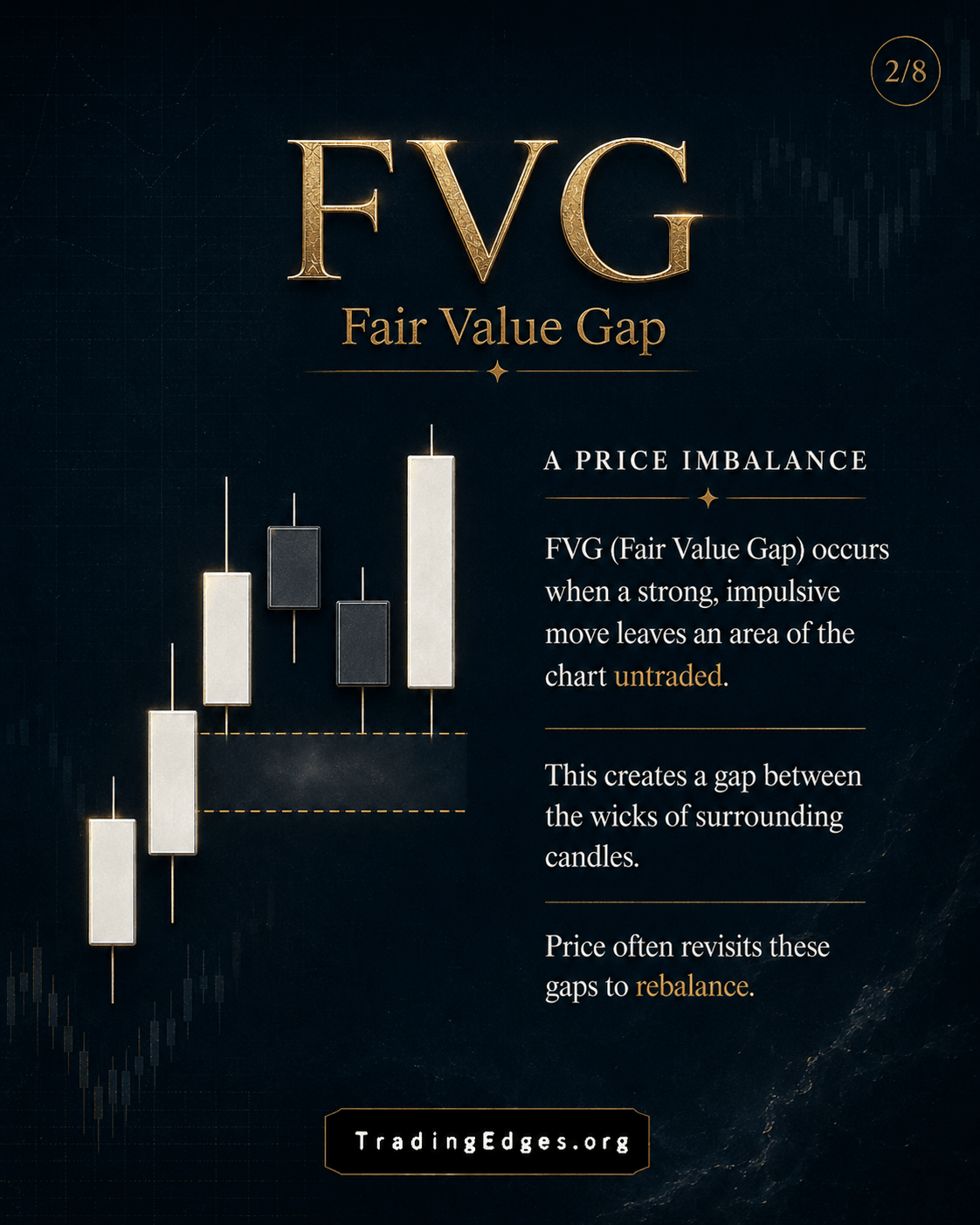
An FVG forms when an impulsive move is so strong it leaves an "untraded void" between the wicks of candle 1 and candle 3. Price tends to come back and rebalance that void before continuing.
Working rule: an FVG aligned with the trend, sitting in discount (for buys), is an A+ zone. A counter-trend FVG is one you wait to see invalidated into an IFVG.
2. VI — Volume Imbalance
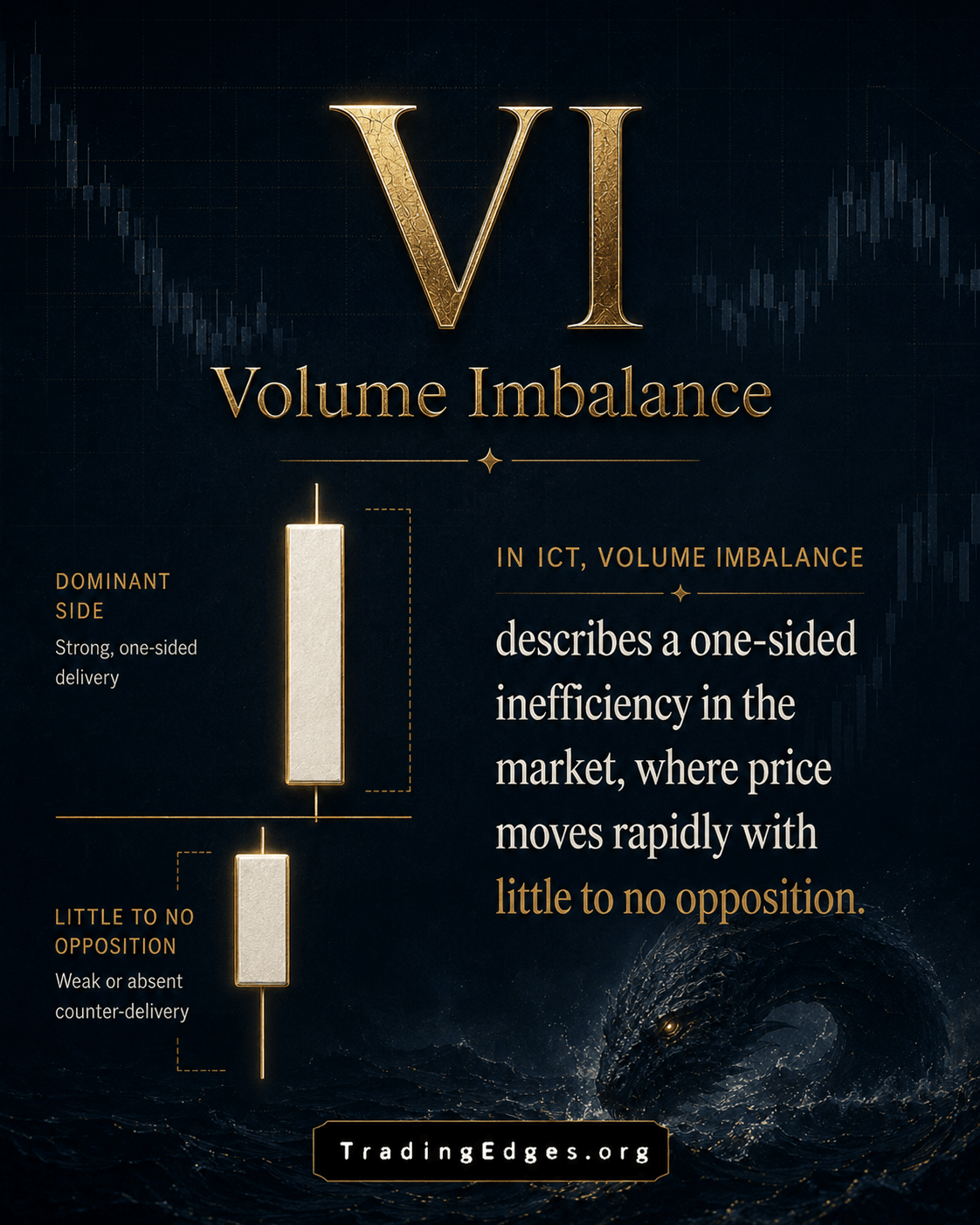
A Volume Imbalance is a one-sided inefficiency where price moved fast with little to no opposition — strong dominant-side delivery, weak or absent counter-delivery.
It differs from an FVG in that a VI is a gap between bodies, not wicks. Use it as confluence: a VI stacked inside an FVG marks a high-quality displacement.
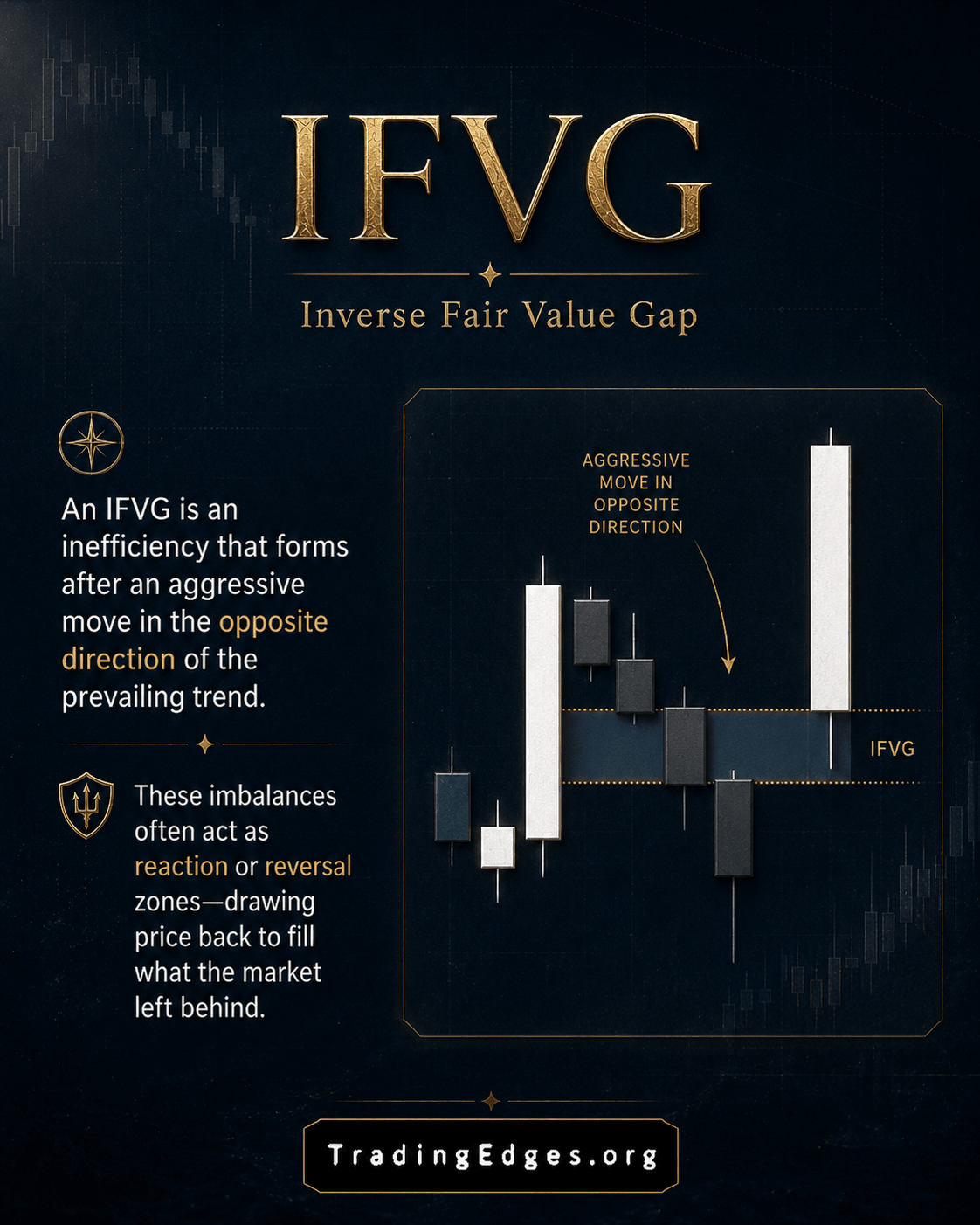
3. IFVG — Inverse Fair Value Gap
An IFVG is an FVG that got violated by an aggressive opposite move — support flips into resistance (or vice versa).
This is the reversal array: when a bullish FVG is smashed through with force, the old zone flips into a selling area. The retest of an IFVG is one of the cleanest entries after structure changes.
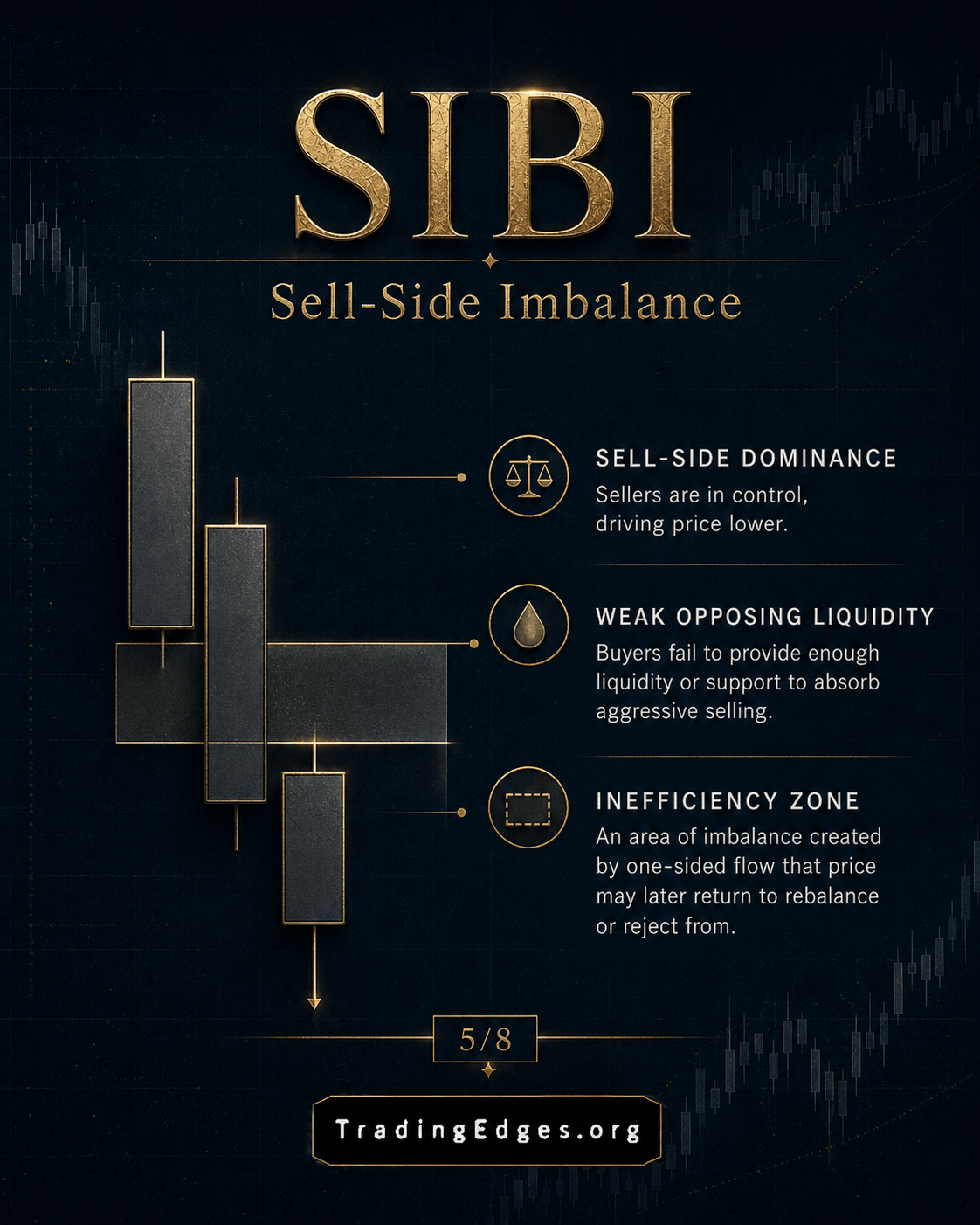
4. SIBI — Sell-Side Imbalance, Buy-Side Inefficiency
A SIBI marks a stretch where sellers owned the market — selling pressure so dominant the buy side had no liquidity to absorb it.
Three ingredients: sell-side dominance + weak opposing liquidity + an inefficiency zone. Price often returns to rebalance or reject from it — treat it as resistance in a bearish context.
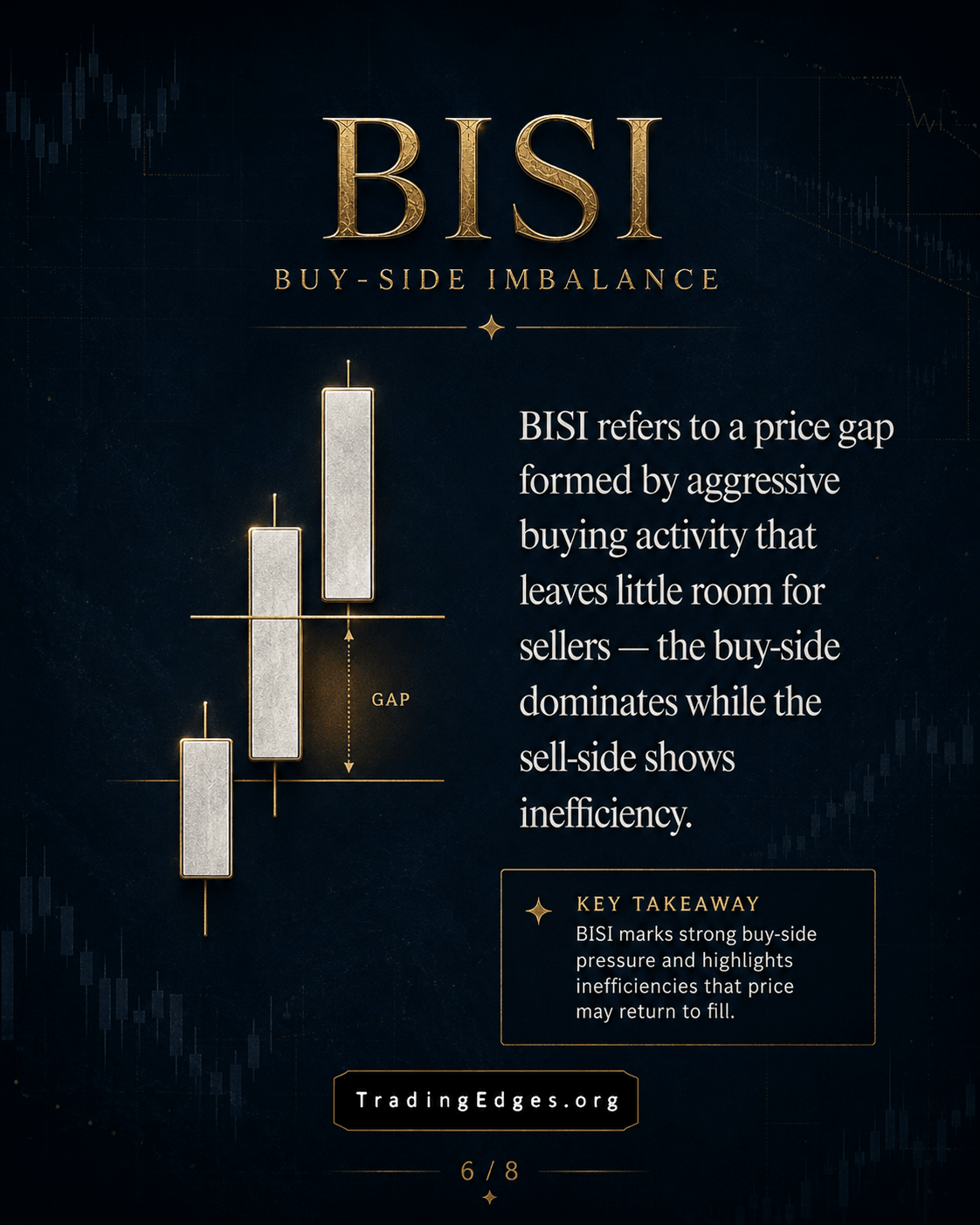
5. BISI — Buy-Side Imbalance, Sell-Side Inefficiency
A BISI is the mirror image — a gap carved by aggressive buying that left the sell side no room. The buy side dominates while the sell side shows inefficiency.
Key takeaway: a BISI is a record of *real* buying pressure. Price usually revisits to partially fill it before continuing — that revisit is the long opportunity in a bullish context.
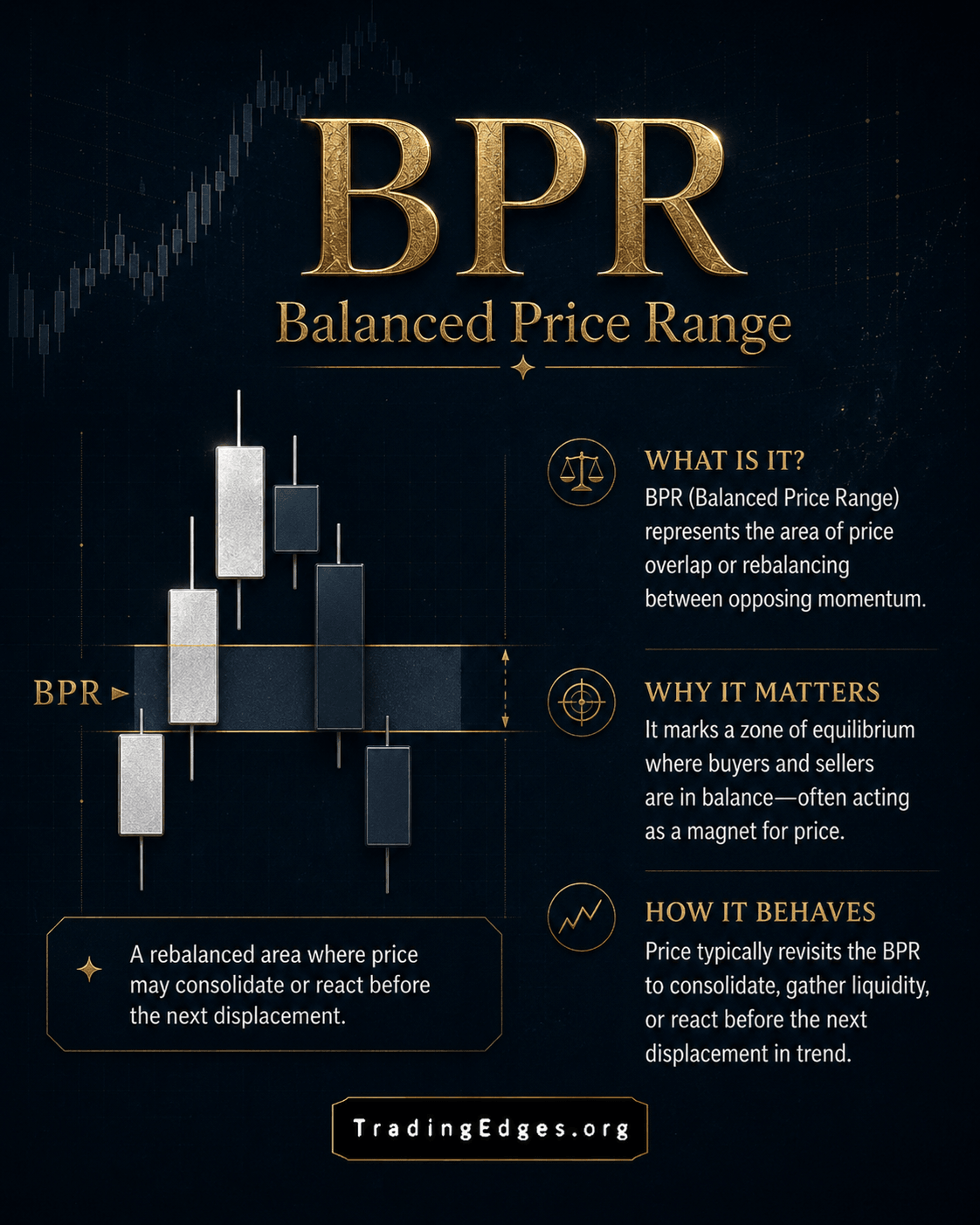
6. BPR — Balanced Price Range
A BPR is where two opposing FVGs (a BISI and a SIBI) overlap — the market has rebalanced in *both* directions.
Trading meaning: a BPR acts as an equilibrium magnet — price consolidates around it, gathers liquidity, then displaces away with the trend. Rule of thumb: never trade inside it, wait for the break.
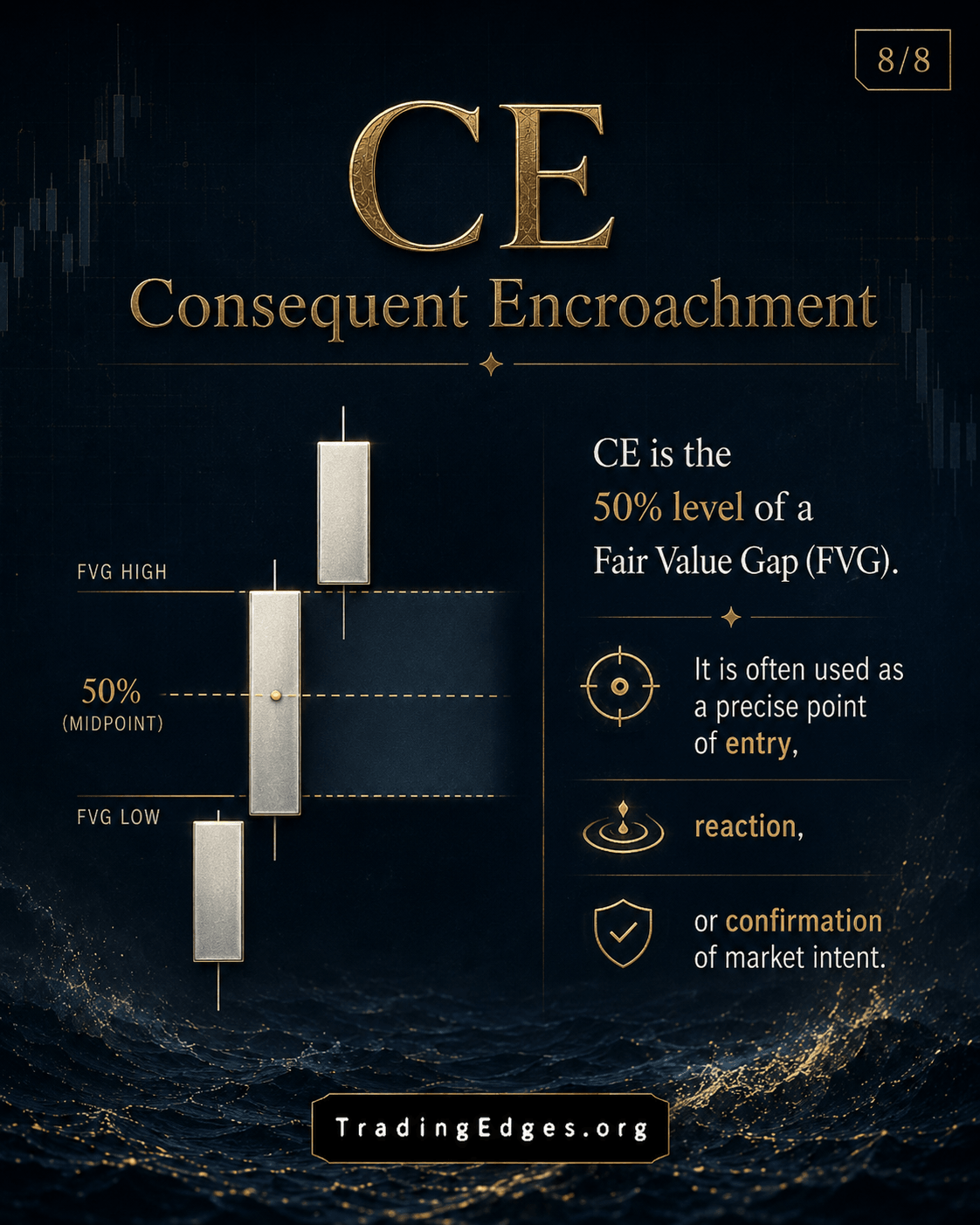
7. CE — Consequent Encroachment (the most precise entry in the family)
The CE is the 50% midpoint of an FVG. ICT teaches that the algorithm respects the half-way point of a gap with remarkable consistency.
How to use it: • Precise entry — set a limit at the CE instead of the FVG edge → better fill and a tighter stop • Reaction read — a bounce off the CE without a full fill = that side is very strong • Confirmation — a close through the CE = the FVG is likely failing, prepare to flip bias
Go deeper with the full Fair Value Gap guide and the structural overview in IRL × ERL.
Inner Circle Trader Bible — 500 pages · PD Arrays, OB, FVG, PO3, Killzones: every concept in one book
คำถามที่พบบ่อย
What are PD Arrays, and how do they differ from normal support/resistance?+
PD Arrays (Premium/Discount Arrays) are the set of price zones the algorithm delivers price through — OB, FVG, VI, BPR and friends. Unlike generic S/R, every array is tied to a mechanism (displacement, imbalance, mitigation) rather than just a line price once touched — and each must always be read against the premium/discount of the dealing range.
FVG vs VI — what is the difference?+
An FVG measures the void between the wicks of candle 1 and candle 3 (a 3-candle inefficiency). A Volume Imbalance measures the gap between the bodies of adjacent candles — price gapped from the prior close while wicks still overlap. VI is the finer-grained signal and is usually used as confluence on top of an FVG.
Can the CE replace waiting for a full FVG fill?+
Yes — and it is usually better. From live trading: price respects the CE (50%) more often than it completes a 100% fill. A limit at the CE gets a better entry and better R:R. But if price CLOSES through the CE, treat the FVG as high-risk of failing.
Which array should a new ICT student learn first?+
FVG → CE → BPR, in that order — they appear most often on every timeframe. Then add SIBI/BISI (reading which side owns the tape) and IFVG (catching reversals). Use VI as a displacement-quality filter throughout.
- Michael J. Huddleston (ICT) — PD Array Matrix mentorship (2016-2022)
- TradingEdges ICT Concept Playbook — 500 pages