
What is Fair Value Gap (FVG)?
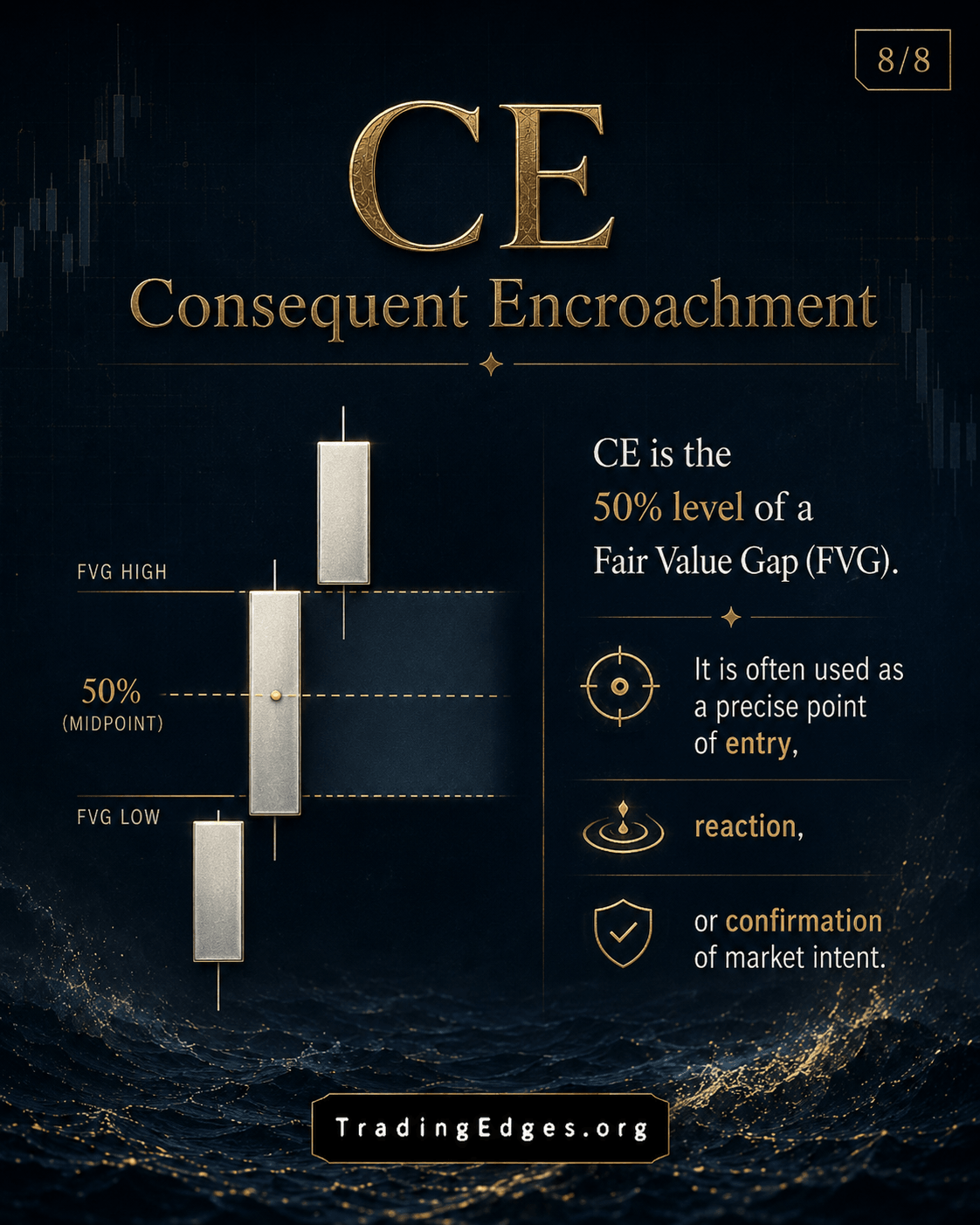
A 3-candle pattern where the high of candle 1 and the low of candle 3 do not overlap — leaving a price "gap" the market often returns to fill.
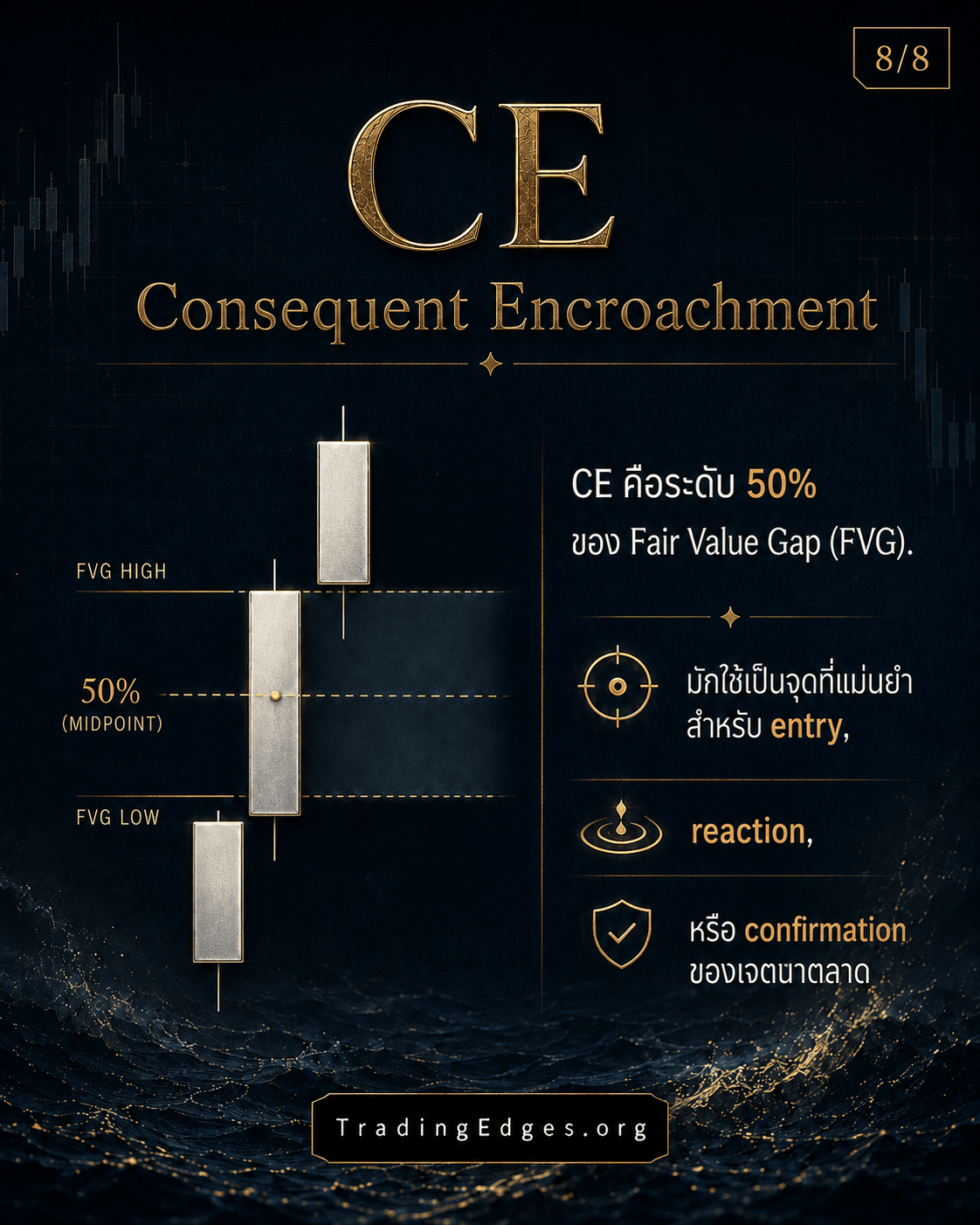
What an FVG is mechanically
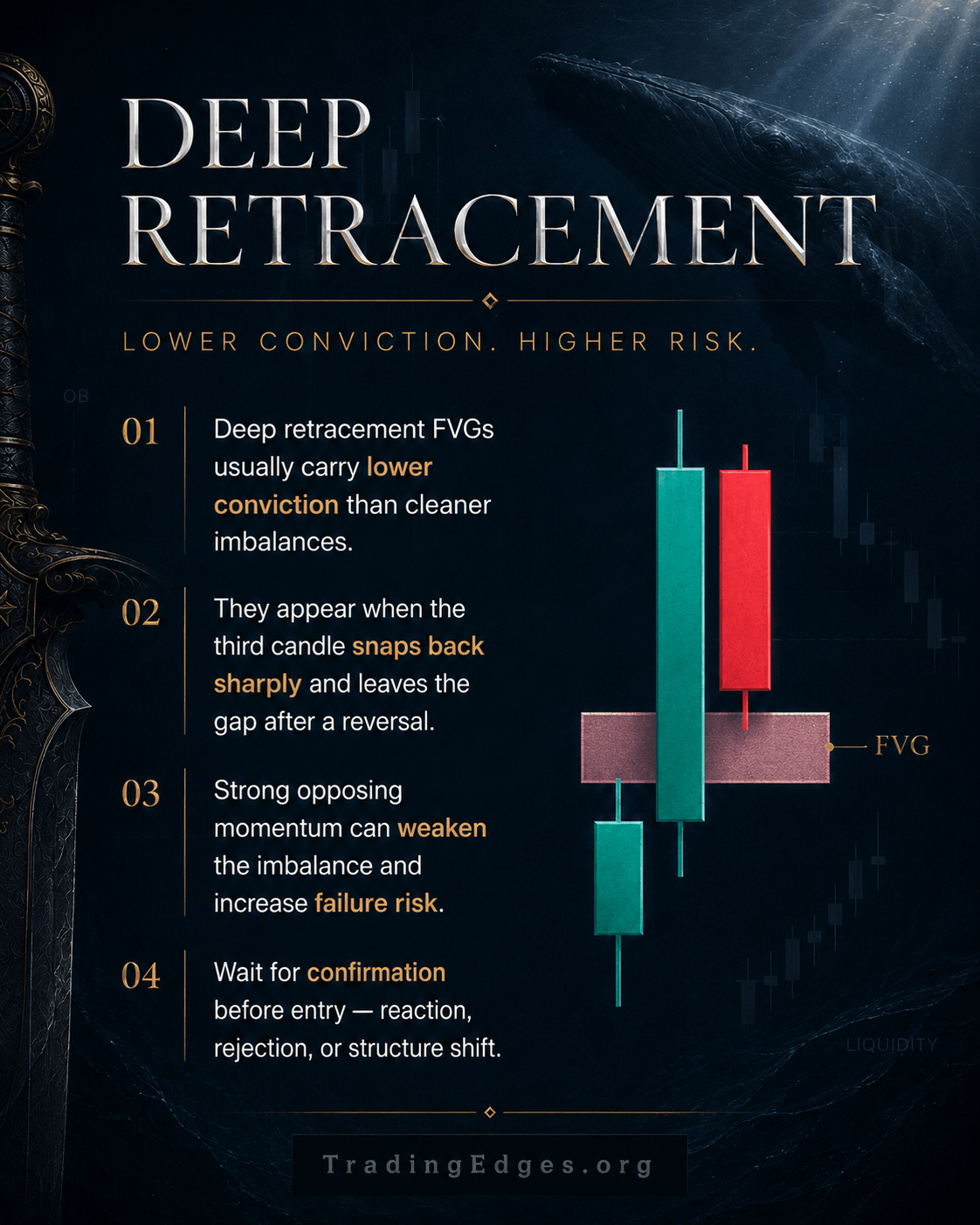
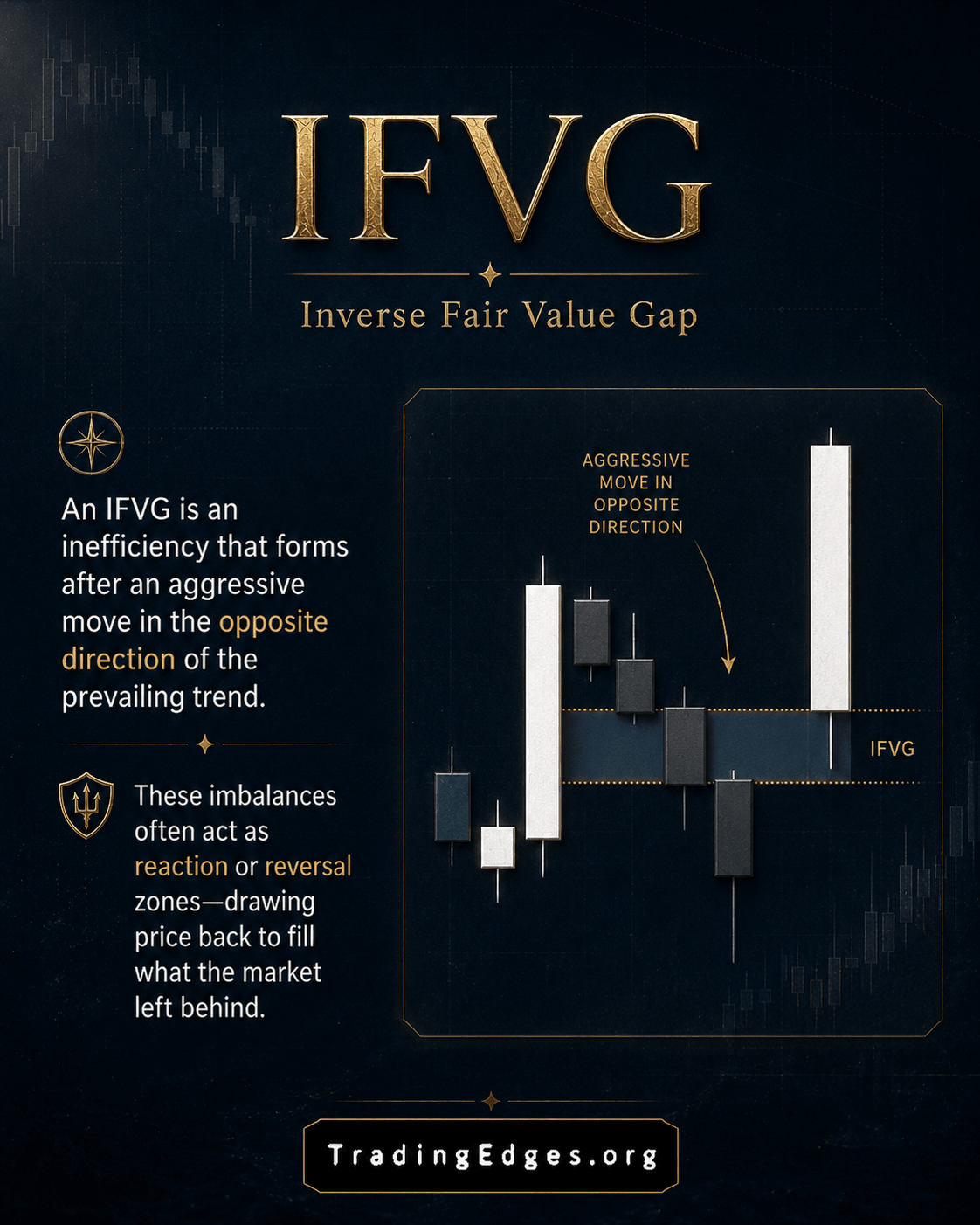
A Fair Value Gap is a 3-candle pattern that shows price moved too fast to allow normal two-way trading. In a bullish FVG: candle 1 closes, candle 2 has a strong upward range, and candle 3 opens above candle 1's high — meaning the price range between candle 1 high and candle 3 low never traded both sides. That untraded zone is the "gap" or "imbalance."
Markets statistically return to these zones over time to fill the imbalance. It is not magic — it is order-flow rebalancing. Aggressive buyers pushed price up so fast that resting sell orders never got hit. When momentum fades, price drifts back to fill them.
How to trade FVGs
Three common approaches: (1) Wait for price to retrace into the FVG zone, look for confirmation (lower-timeframe reversal candle, structure shift), enter in the direction of the original move. (2) Trade fills on higher-timeframe FVGs as continuation targets — when you see one, expect price to revisit it within hours-to-days. (3) Combine with Order Blocks — when an FVG sits inside an OB, the confluence makes the zone significantly stronger.
Stop placement is typically just outside the opposite end of the FVG. Target is often the next structural level (recent swing high, resistance).
Higher-timeframe FVGs matter more
As with all price-action concepts: a daily FVG carries more weight than a 5-minute FVG. Institutions rebalance over weeks, not seconds. The 5-min imbalance might be retail flow noise that never gets filled because the market has moved on.
Professionals filter: only mark FVGs on 1H/4H/daily timeframes for swing trades; use 5-15min only as entry triggers inside a higher-timeframe FVG zone.
- Trading every 1-minute FVG — they fill 90% of the time but the trade is unprofitable after spread
- No invalidation — if an FVG breaks fully through without a fill, the trade thesis is dead
- Ignoring confluence (FVG + OB + structure = good · FVG alone in chop = noise)
- Marking gaps backwards — bullish FVG is C1-high → C3-low, not C3-high → C1-low