
What is Order Block (OB)?
A consolidation zone on a chart immediately preceding a strong directional move, marked as the area where larger participants are believed to have positioned before pushing price.

What an Order Block actually is
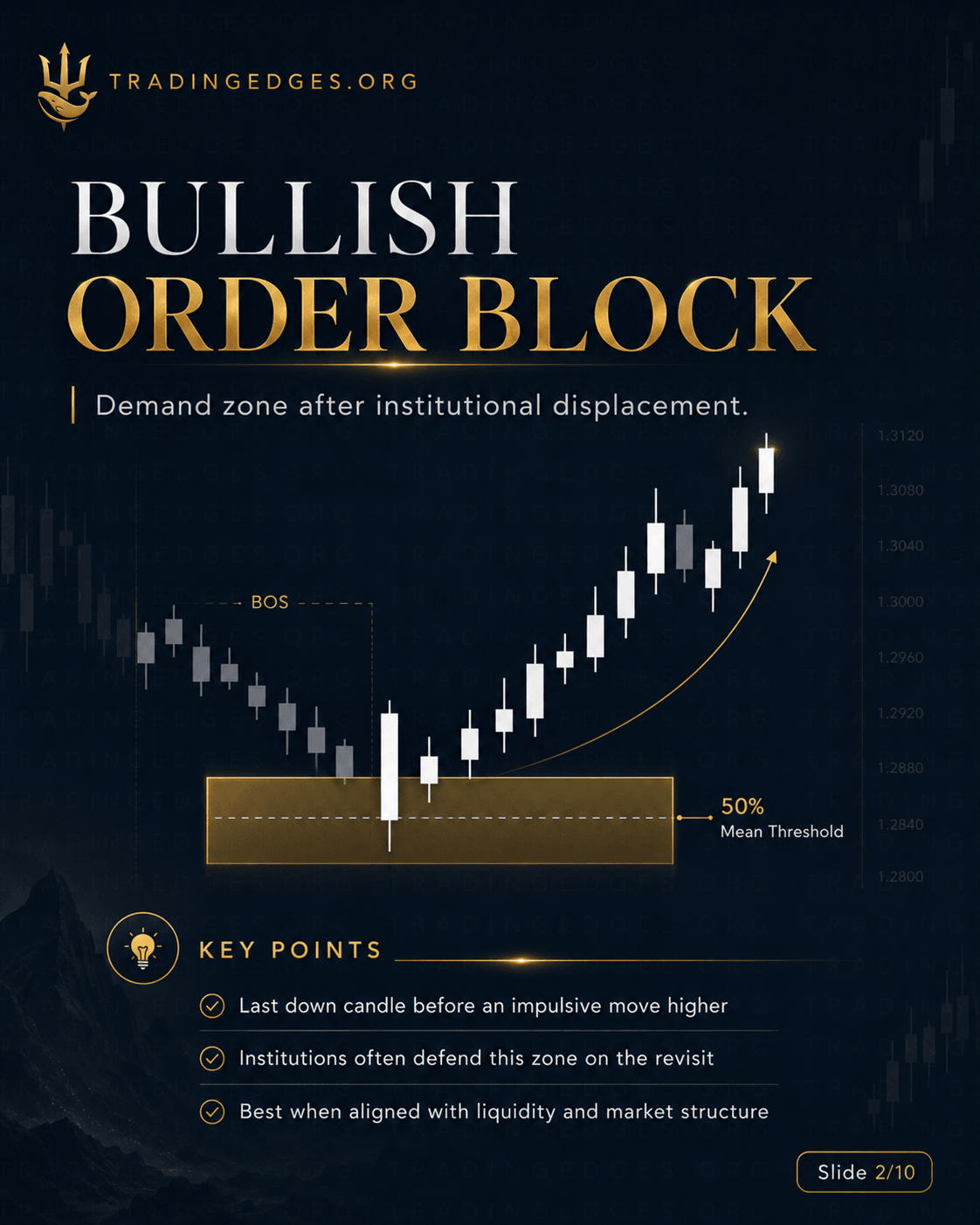
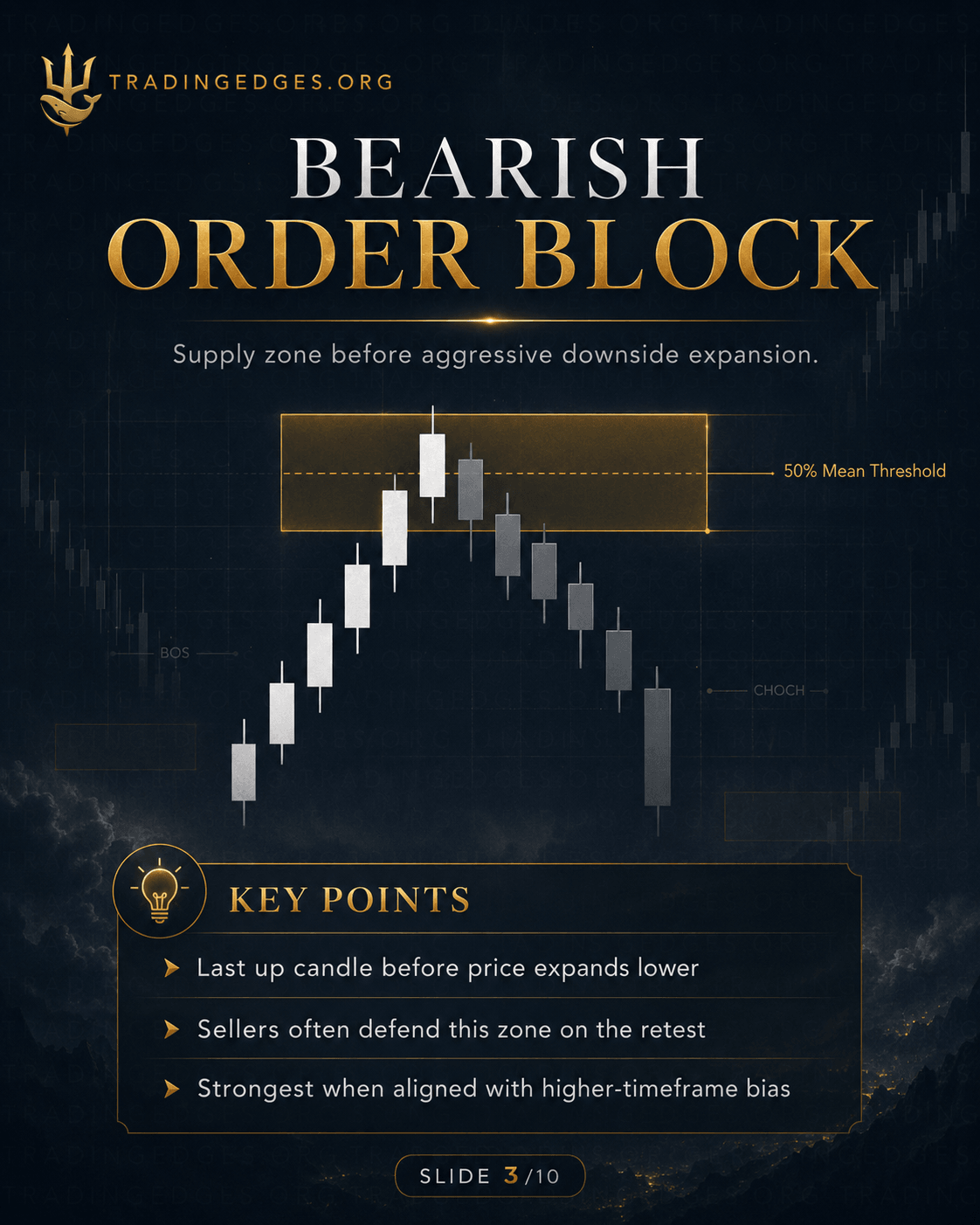
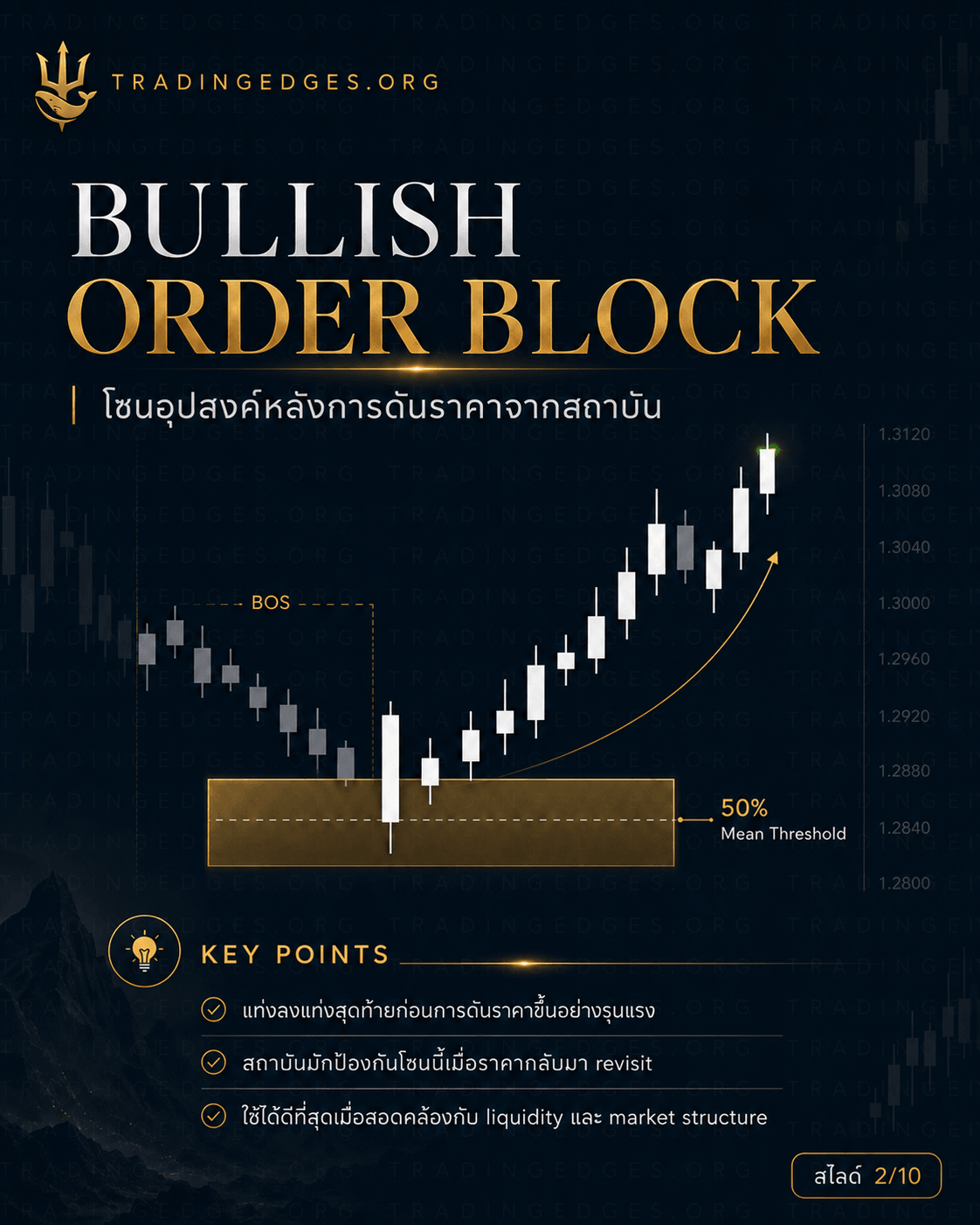
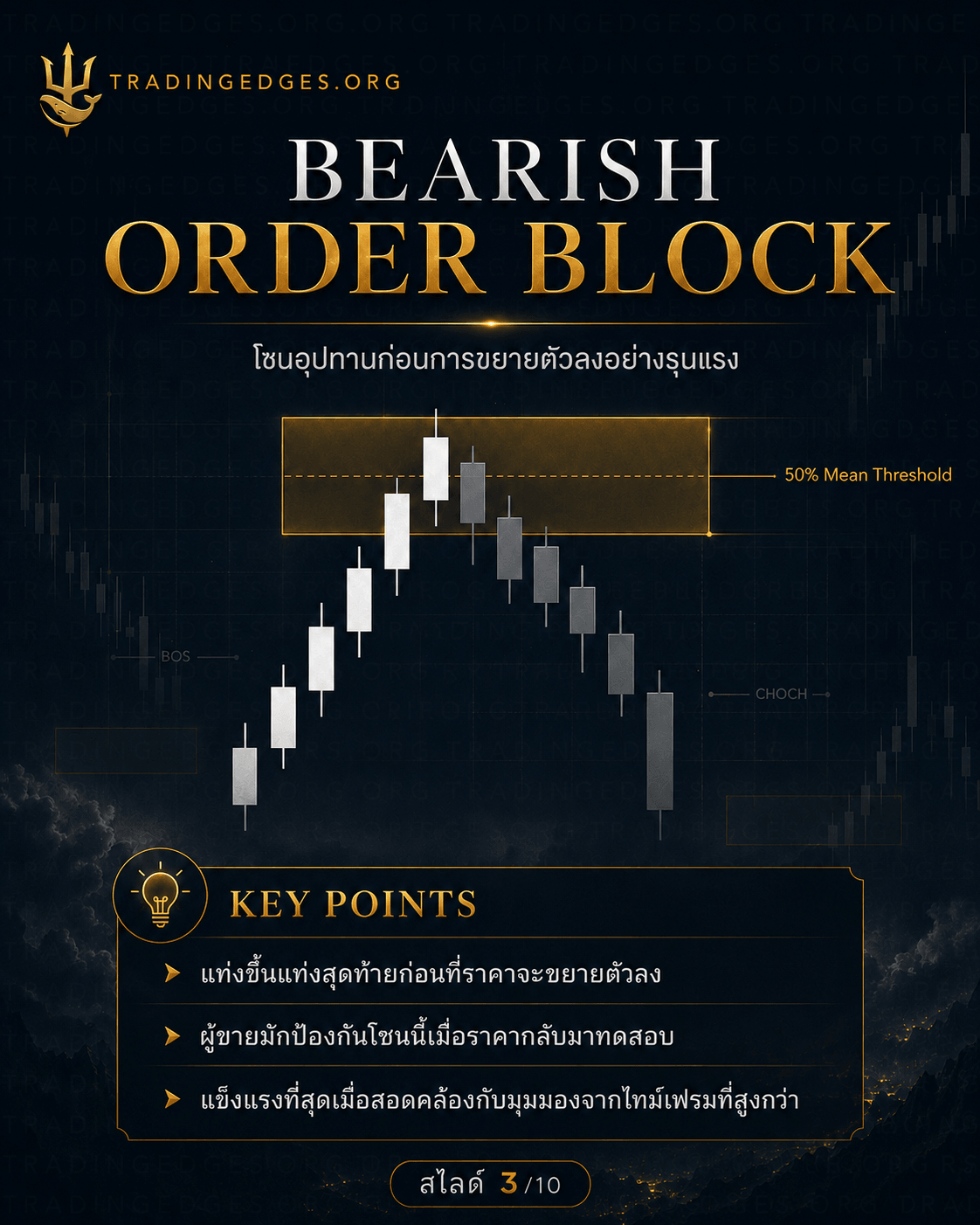
An Order Block is a specific candle (or small cluster of candles) on a chart that comes immediately before a strong impulsive move in the opposite direction. The theory: institutional participants accumulate their position inside the consolidation, then displace price hard once enough size is filled. When price later returns to that consolidation zone, the institutional buyers/sellers defend it — creating a reaction high-probability traders try to capture.
A bullish Order Block is the last bearish (down) candle BEFORE a strong move up. A bearish Order Block is the last bullish (up) candle BEFORE a strong move down. The "opposite color before displacement" rule is the simplest formal definition.
How to mark an Order Block
Step-by-step: (1) Identify a strong impulsive move on your timeframe — a candle or sequence that clearly breaks recent structure. (2) Look at the candles immediately preceding the move. (3) Mark the last opposite-color candle's body (open-to-close range), or sometimes the entire candle (wick included) — depending on your school of thought.
The Order Block is "valid" until price returns to it and either holds (reaction trade) or fails (the OB is "broken" and becomes a Breaker Block instead).
Higher-timeframe vs lower-timeframe Order Blocks
OBs on the 4-hour, daily, and weekly charts carry significantly more weight than 1-minute or 5-minute OBs. The reason is simple — more time passes during higher-timeframe consolidations, allowing institutions to actually fill size. A 1-minute OB might just be retail noise; a daily OB might be a real institutional positioning zone.
Professional traders typically identify OBs on higher timeframes (4H / daily) for direction, then drop to 5-15min to enter on retest.
When Order Blocks fail
An OB does not magically hold every time. Failure happens when: (a) price burns through it without reaction (the institutional book has already redistributed elsewhere), (b) the OB was marked on noise rather than real displacement, or (c) news/macro flow overrides the structure. A failed OB becomes a Breaker Block — a zone where price reverses through the original level and may now act as resistance/support from the opposite side.
Good Order Block trading requires invalidation rules (stop above/below the OB structure) and risk management — never "all in" on the theory alone.
- Marking every consolidation as an OB — must precede STRONG displacement, not weak chop
- Using 1-minute OBs in isolation without higher-timeframe context
- No invalidation point — "OB always holds" thinking blows up accounts
- Ignoring news / macro events that override technical structure