
What is Breaker Block?
A former Order Block that has been broken through — now acts as resistance/support from the opposite side when revisited.
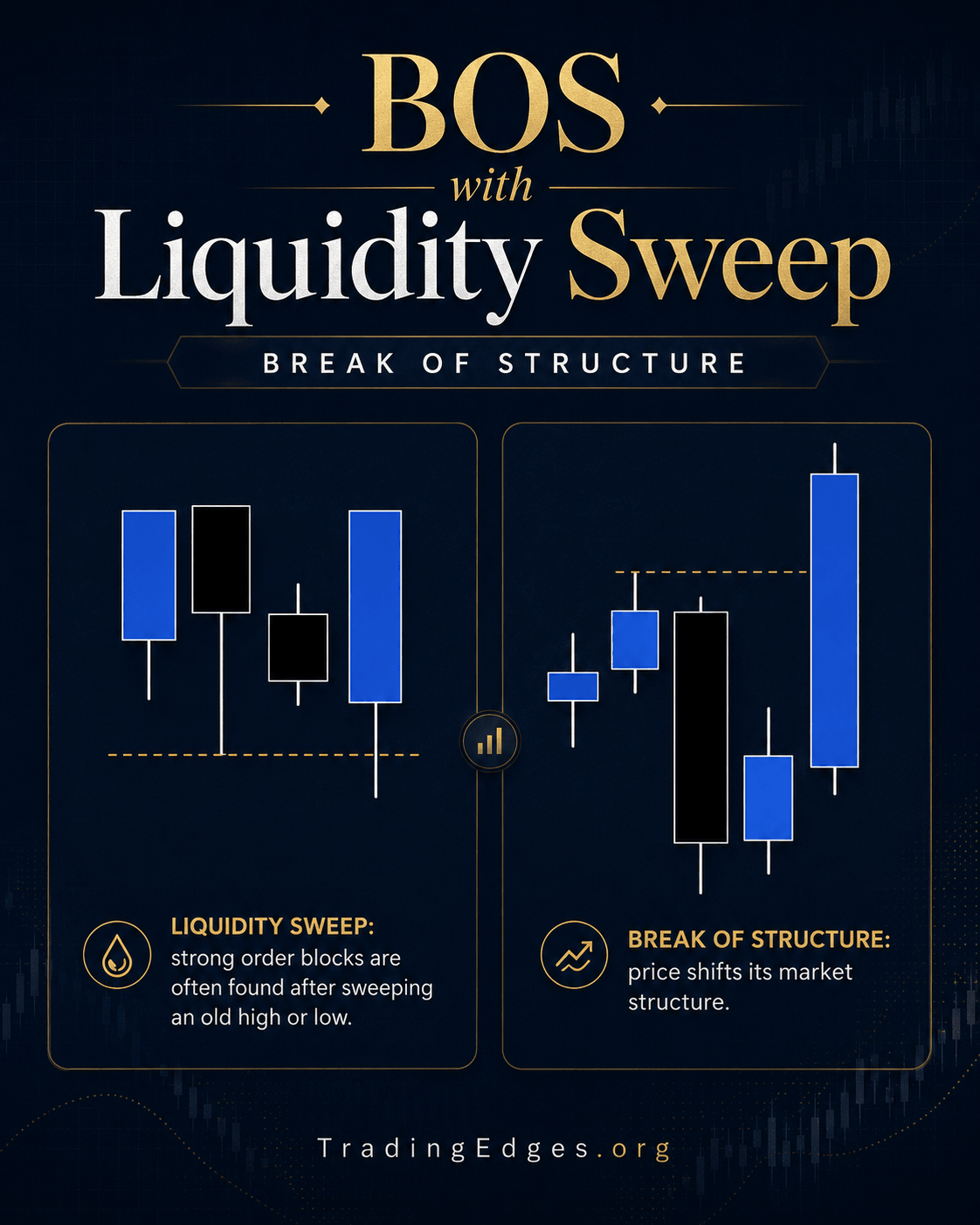

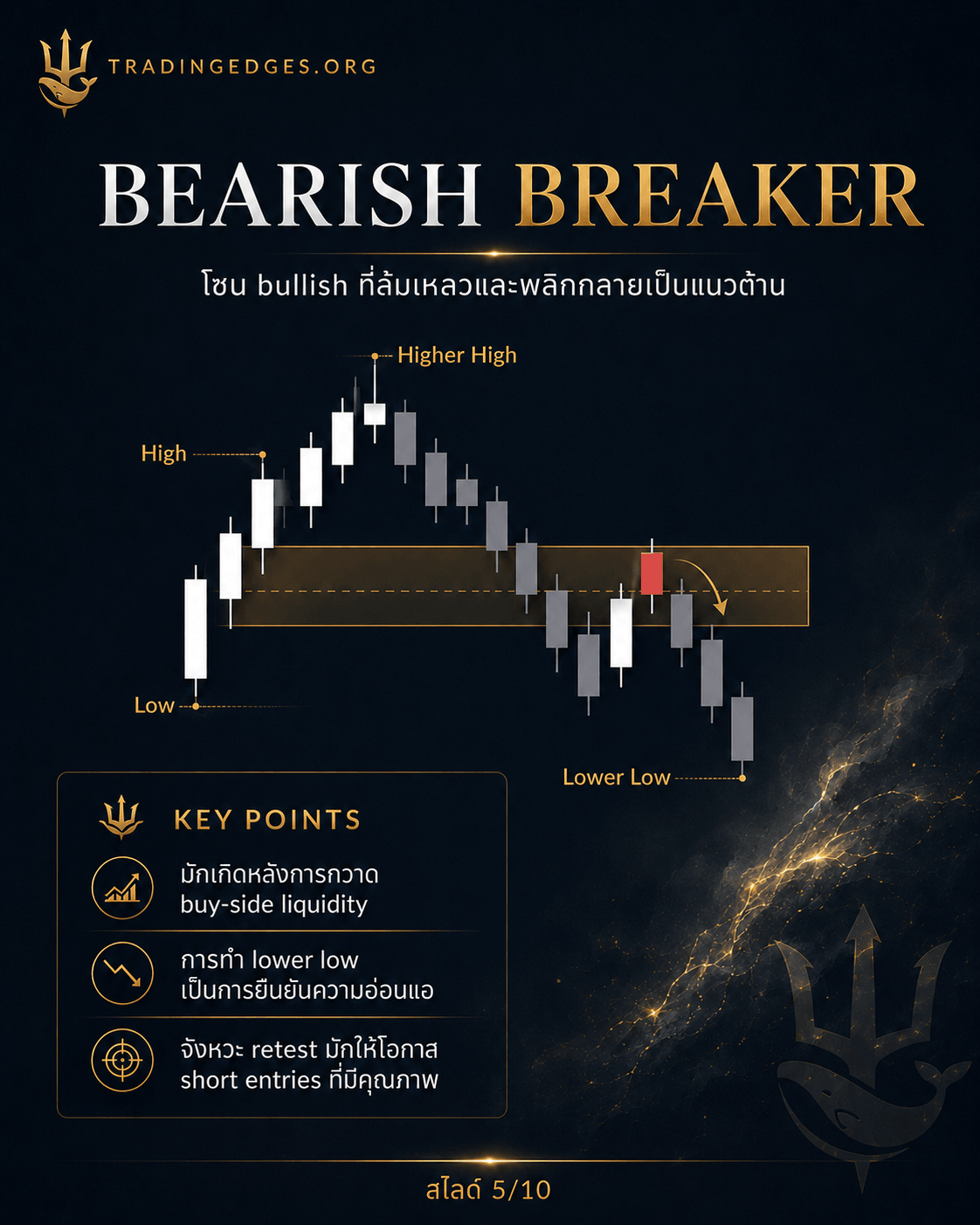
Breaker Block in one sentence
A Breaker Block is what an Order Block becomes after it fails. An OB that was supposed to hold as support (bullish OB) but instead gets broken to the downside flips polarity — when price later returns to that zone from below, it now acts as resistance. The "failed" OB has become a Breaker Block.
The logic: institutions who placed orders in the original OB had their stops hit. Those institutions are now in a losing position. When price comes back to the level, they may exit at break-even, creating selling pressure precisely at the zone they originally bought.
How to identify and trade Breaker Blocks
Identify: (1) Find an OB. (2) Confirm the OB has been broken (price closed beyond the OB extreme, not just wicked through). (3) Wait for price to retrace back to the broken OB. (4) Look for rejection candles at the level. (5) Enter in the new direction with stop just past the OB extreme on the original side.
Breakers work especially well at higher timeframes. A weekly OB that breaks and then becomes a weekly Breaker is a major level — institutional re-positioning happens there.
Distinguishing from a normal retest
Every broken level becomes a "retest" candidate, but Breaker Blocks specifically are former Order Blocks (with the institutional positioning narrative). A random broken resistance line might just be a chart artifact. A broken OB has a clearer logical reason to act as resistance on the retest.
This is why traders often layer concepts: a Breaker Block sitting at a Fibonacci OTE level inside a higher-timeframe premium zone, retested during the London-NY killzone, is the kind of multi-confluence setup that defines high-probability trading.
- Mistaking a wick-through for a real OB break — wait for a clean close beyond
- Trading breaker retests during low-liquidity sessions (overnight Asia)
- No invalidation if price reclaims the broken OB
- Using minute-timeframe breakers as standalone trades