
What is Daily Bias?
The expected directional lean for the trading day based on higher-timeframe structure — bullish, bearish, or neutral.
Setting a daily bias
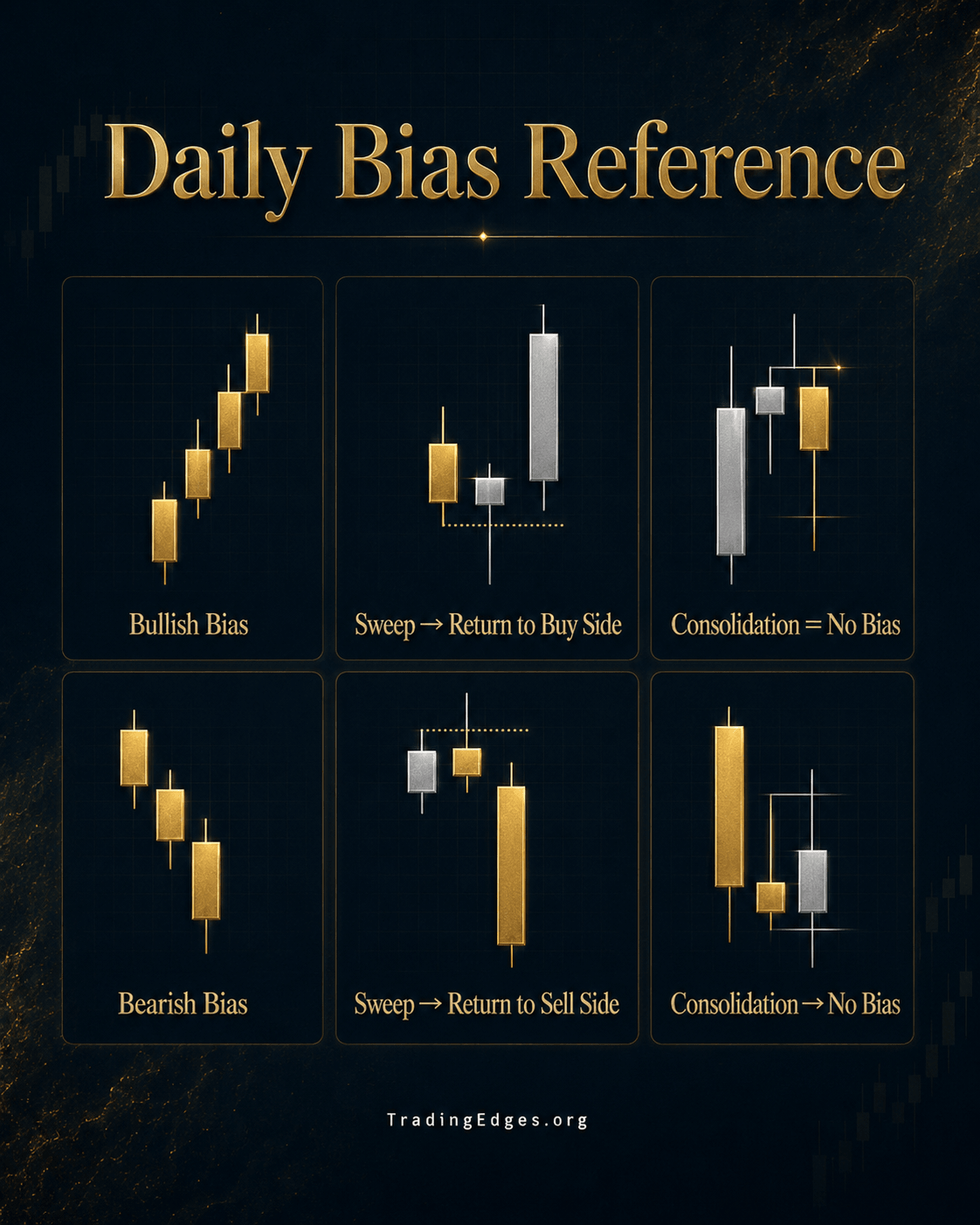
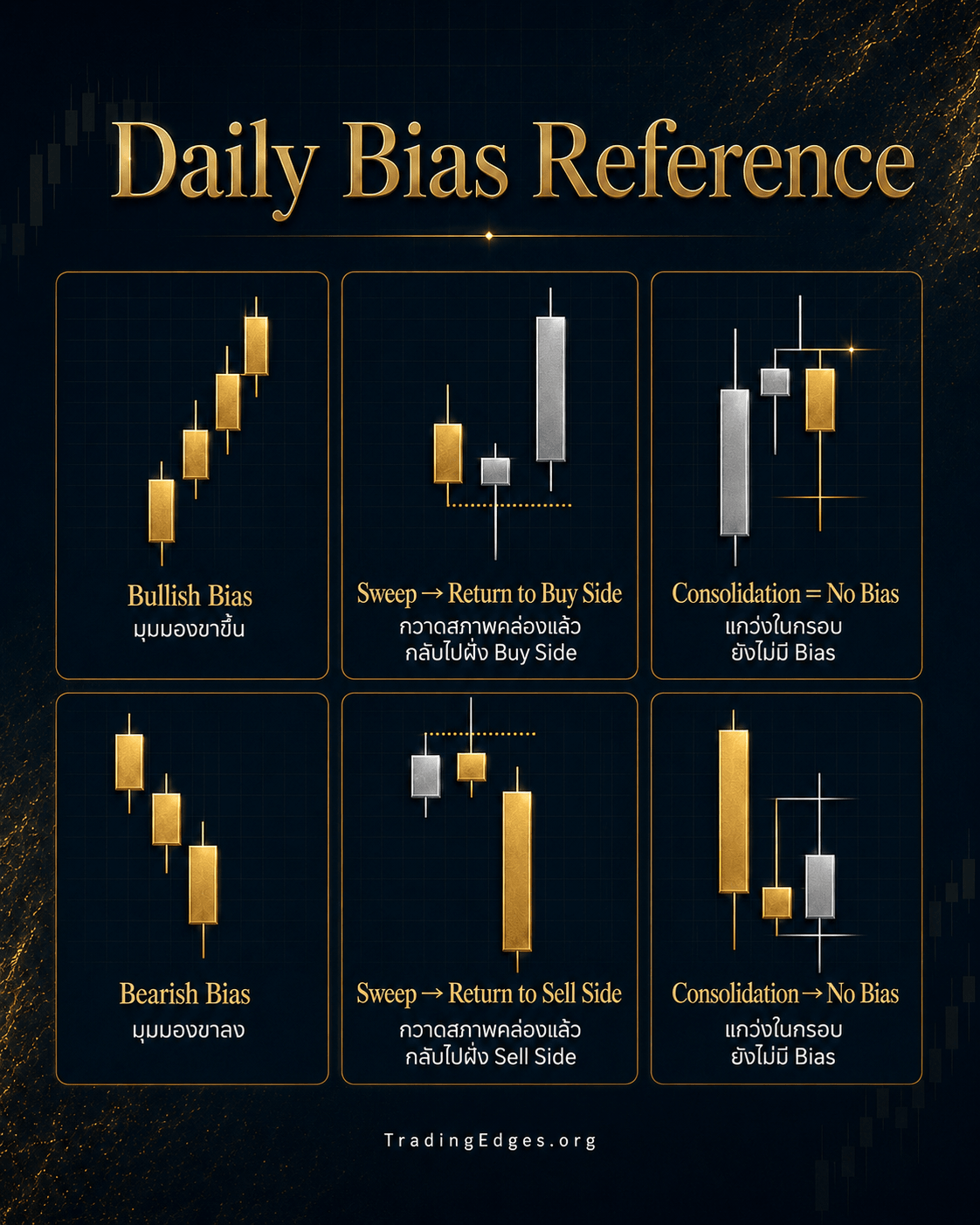
Daily bias is the answer to "which side should I prefer trading today?" Set it before market open using: (1) weekly trend direction (higher-low / higher-high pattern), (2) daily candle from the prior day (was it bullish or bearish, what was the close relative to open), (3) any unfilled higher-timeframe FVGs or Order Blocks above/below current price, (4) macro context (economic calendar for the day).
A bullish daily bias means you favor long setups and avoid short setups, even if a short setup looks technically valid. A neutral bias means stay flat or wait for one direction to clarify.
Why daily bias matters
Without a daily bias, a trader is reactive — taking trades in whichever direction the chart "looks good" in the moment. This leads to whipsaw losses because intraday charts produce both bullish and bearish setups in any given day; only one direction tends to follow through.
With a daily bias, you have a filter: only take setups aligned with your bias. The bias might be wrong (market reverses), but the discipline of filtering reduces over-trading and keeps you aligned with the dominant flow.
When to flip the bias
Bias flip triggers: (a) higher-timeframe CHoCH (Change of Character) — the most recent significant low gets broken in an uptrend (or high in a downtrend). (b) Major macro event that contradicts the prior bias — Fed surprise, geopolitical shock. (c) Multiple consecutive failed setups in your bias direction — the market is telling you the bias was wrong.
Don't flip on a single 5-minute reversal candle. The whole point of daily bias is to ignore noise.
- No bias at all — trading whatever looks good moment-to-moment
- Setting bias but breaking it for "obvious" intraday setups
- Flipping bias on small reversal signals — too sensitive
- Confusing weekly bias with daily — different timeframes, different setups