
What is Killzone (Session Timing)?
High-volatility windows during the forex day when most directional moves happen — London open, New York open, and the London-NY overlap.

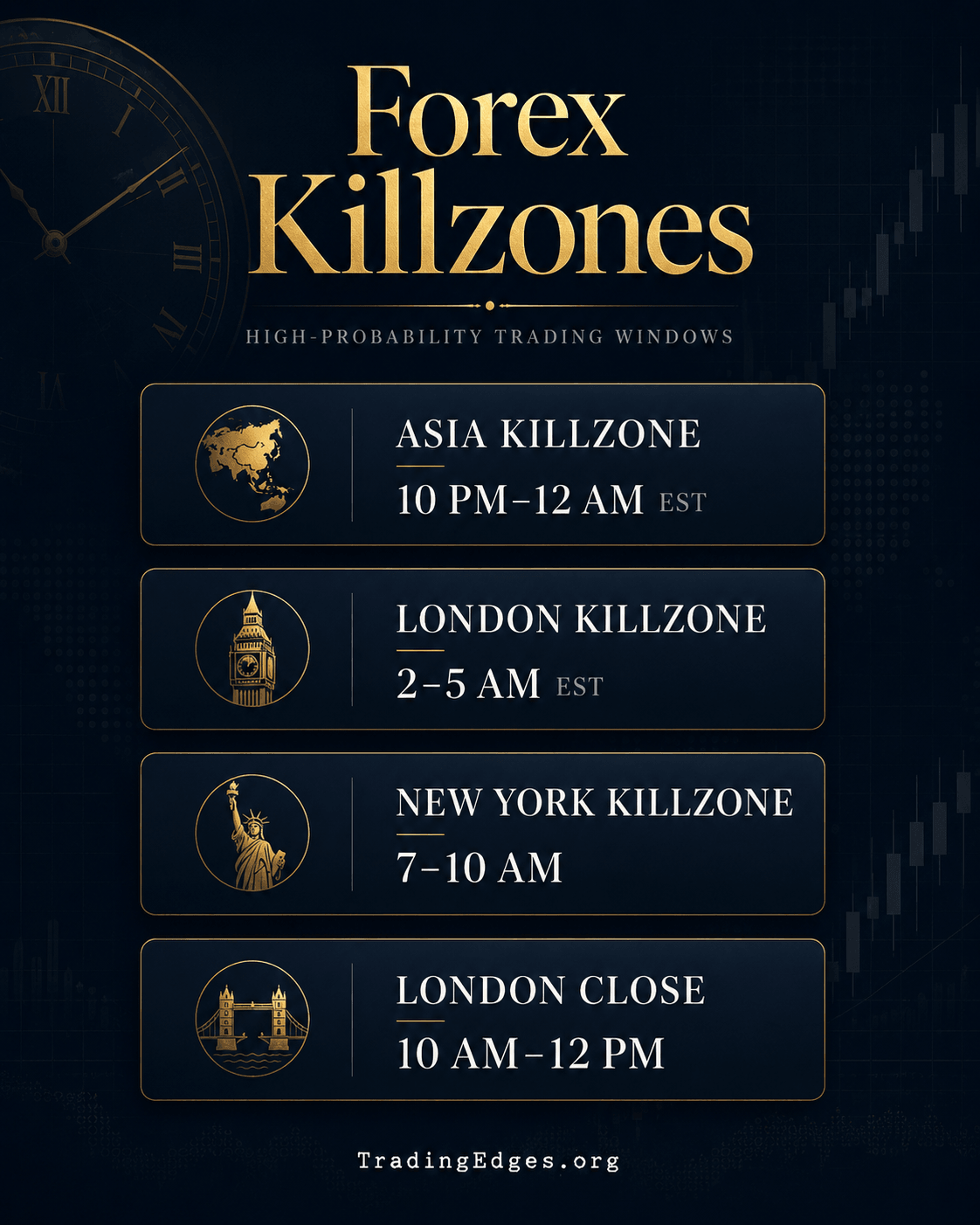
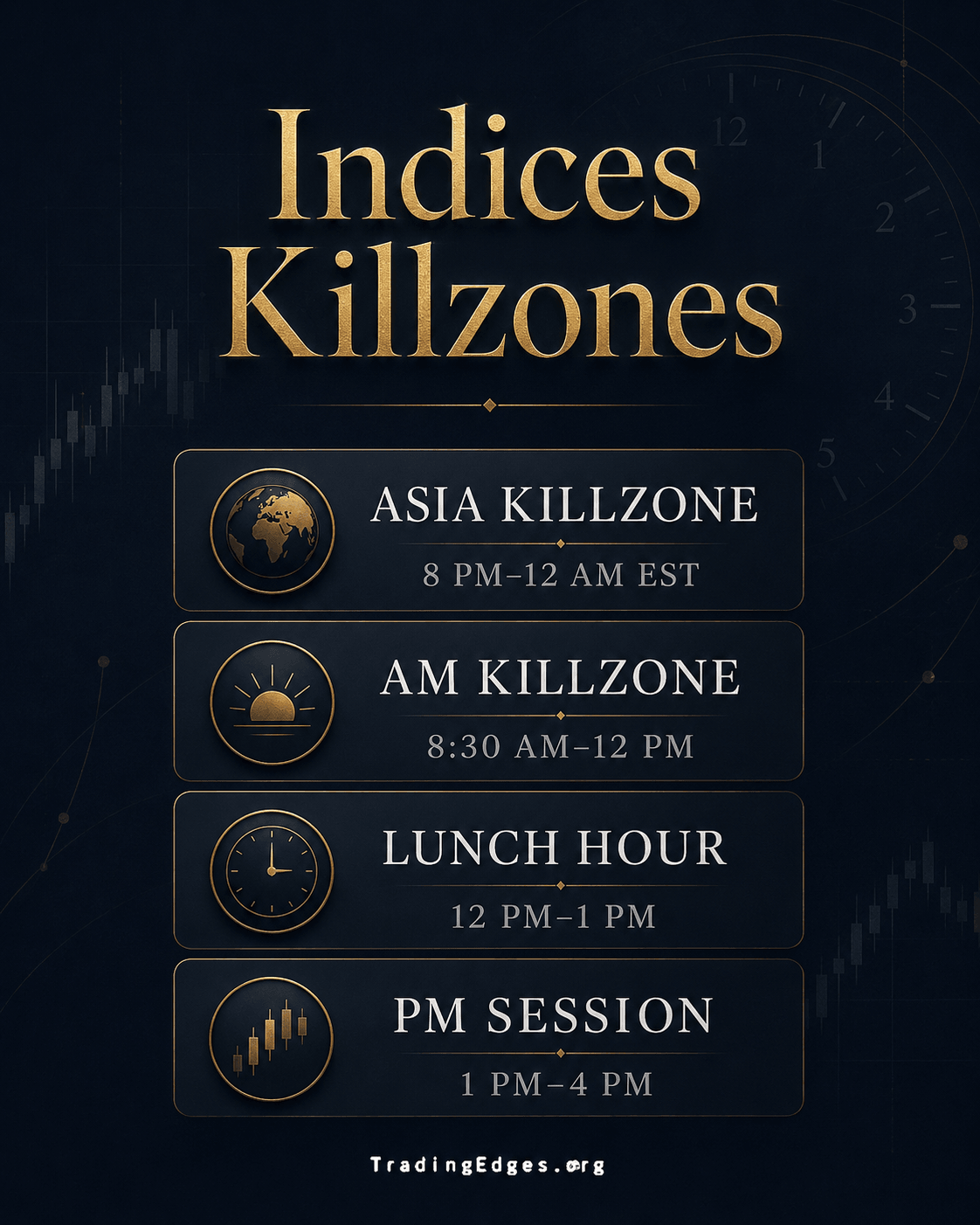
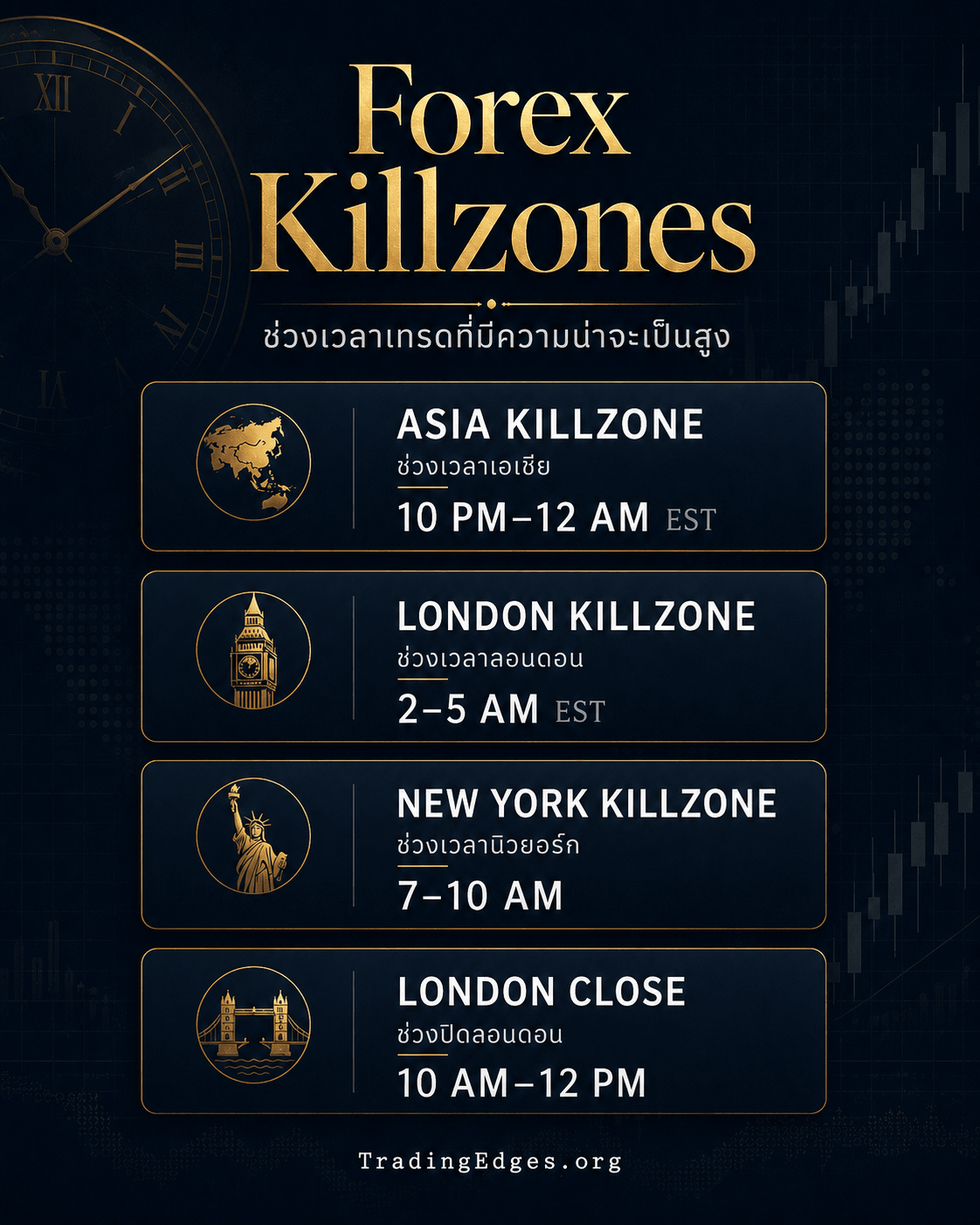
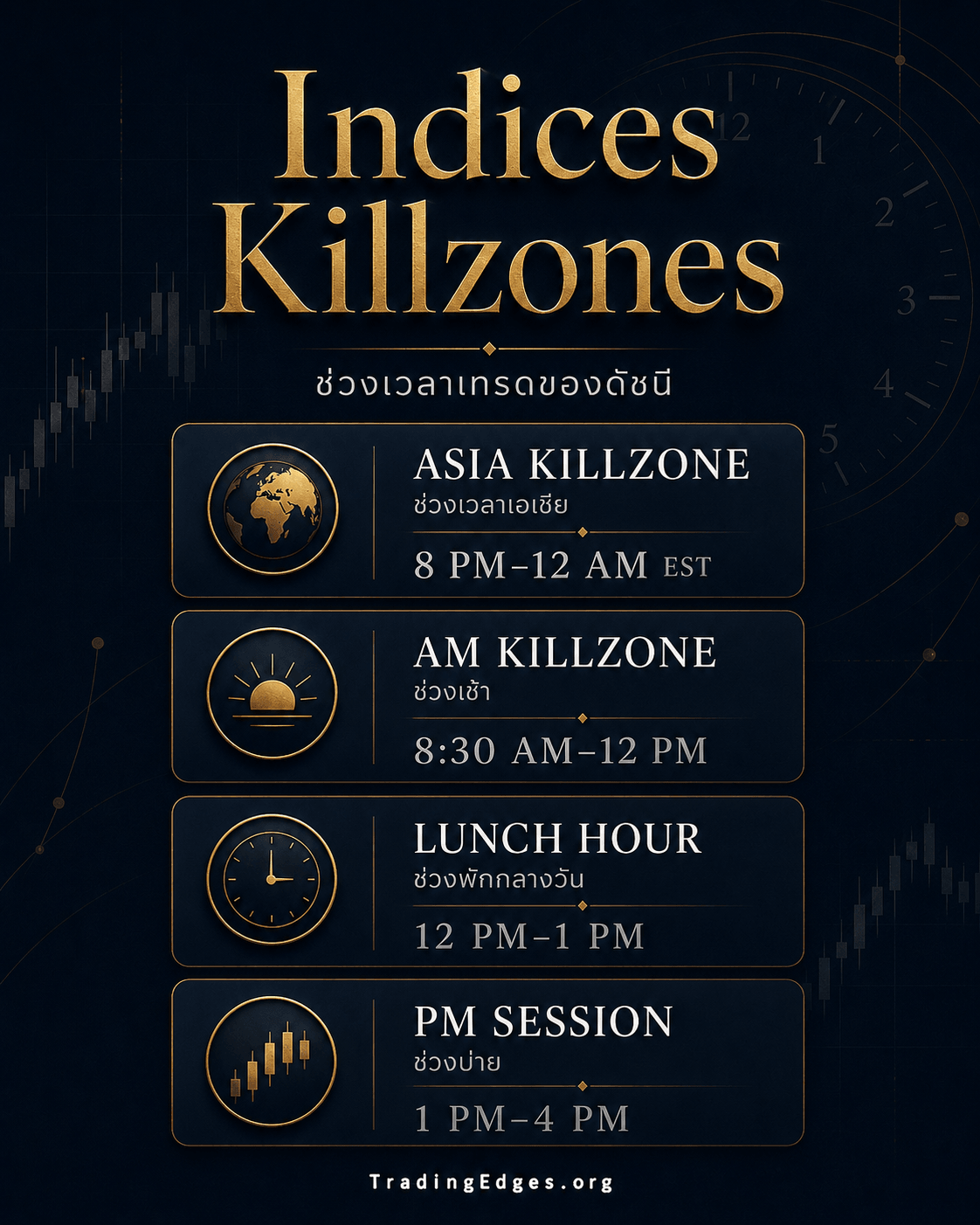
The four main killzones
Asia session killzone (approx. 22:00-04:00 GMT): low volume, typical range-bound. Most useful for JPY pair setups and overnight position closes.
London open killzone (06:00-09:00 GMT): explosive volatility as European banks come online. EUR, GBP, CHF pairs see their largest moves.
New York open killzone (12:00-15:00 GMT): USD pairs and gold (XAUUSD) come alive. Major economic data (NFP, CPI, Fed) releases during this window.
London-NY overlap (12:00-17:00 GMT): the highest-volume window of the entire trading day. Both major financial centers active. Spreads tightest, execution best, volatility highest.
Why killzones matter for ICT-style trading
Liquidity sweeps, displacements, and most clean structural moves happen during killzones. Outside killzones (overnight Asia, weekends) markets often chop sideways with thin volume — patterns that look like setups fail because there's no institutional flow to confirm them.
Practical rule: take 80% of your trades within the London open or NY open killzones, especially the London-NY overlap. Avoid taking new positions during Asia chop unless you specifically trade JPY pairs with a session-tuned strategy.
Killzone selection by strategy
Scalpers and 5-min traders: London open and NY open killzones are mandatory. Daily ranges develop here; lower-timeframe setups have follow-through.
Swing traders (4H, daily): killzone timing matters less for entries because hold periods span multiple sessions, but entry execution still benefits from killzone liquidity.
Asian session pure plays: range-trading USDJPY between Tokyo lows and highs — niche strategy that ignores Western killzones entirely.
- Trading every hour of the day → most trades are noise in dead sessions
- Forcing trades during Asia session because the LTF "looks good" — no institutional flow to confirm
- Holding through major news inside NY killzone without a wider stop
- Ignoring local timezone — set Bangkok time = GMT+7, so London open is 13:00-16:00 Bangkok