
What is Power of Three (AMD)?
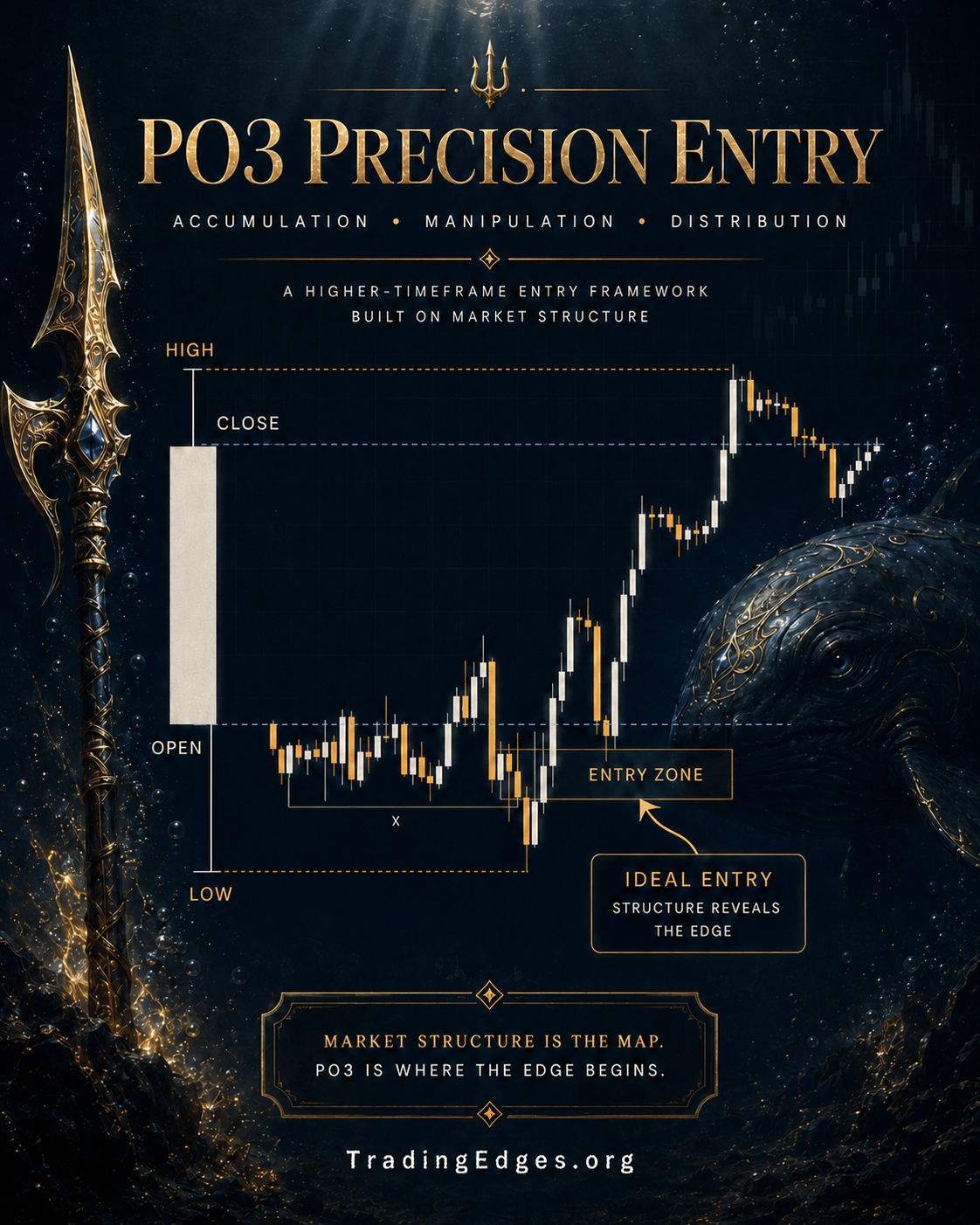
A three-phase model of price action: Accumulation (range), Manipulation (false move / sweep), Distribution (true move) — repeats on daily and intraday cycles.

The three phases explained
Accumulation: price ranges sideways while institutions quietly build positions. Volume may be present but direction is unclear — to the retail eye, this looks like "nothing happening."
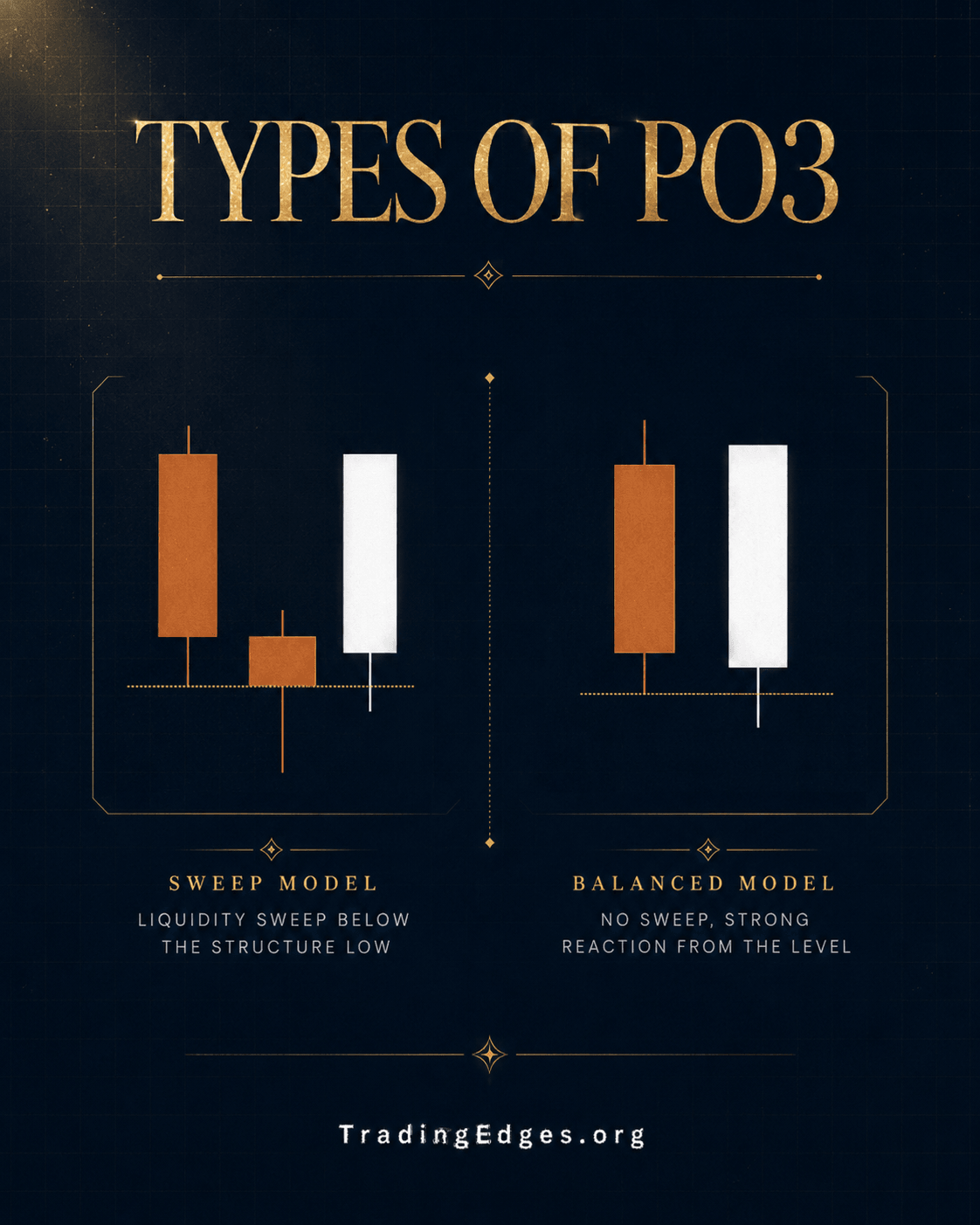
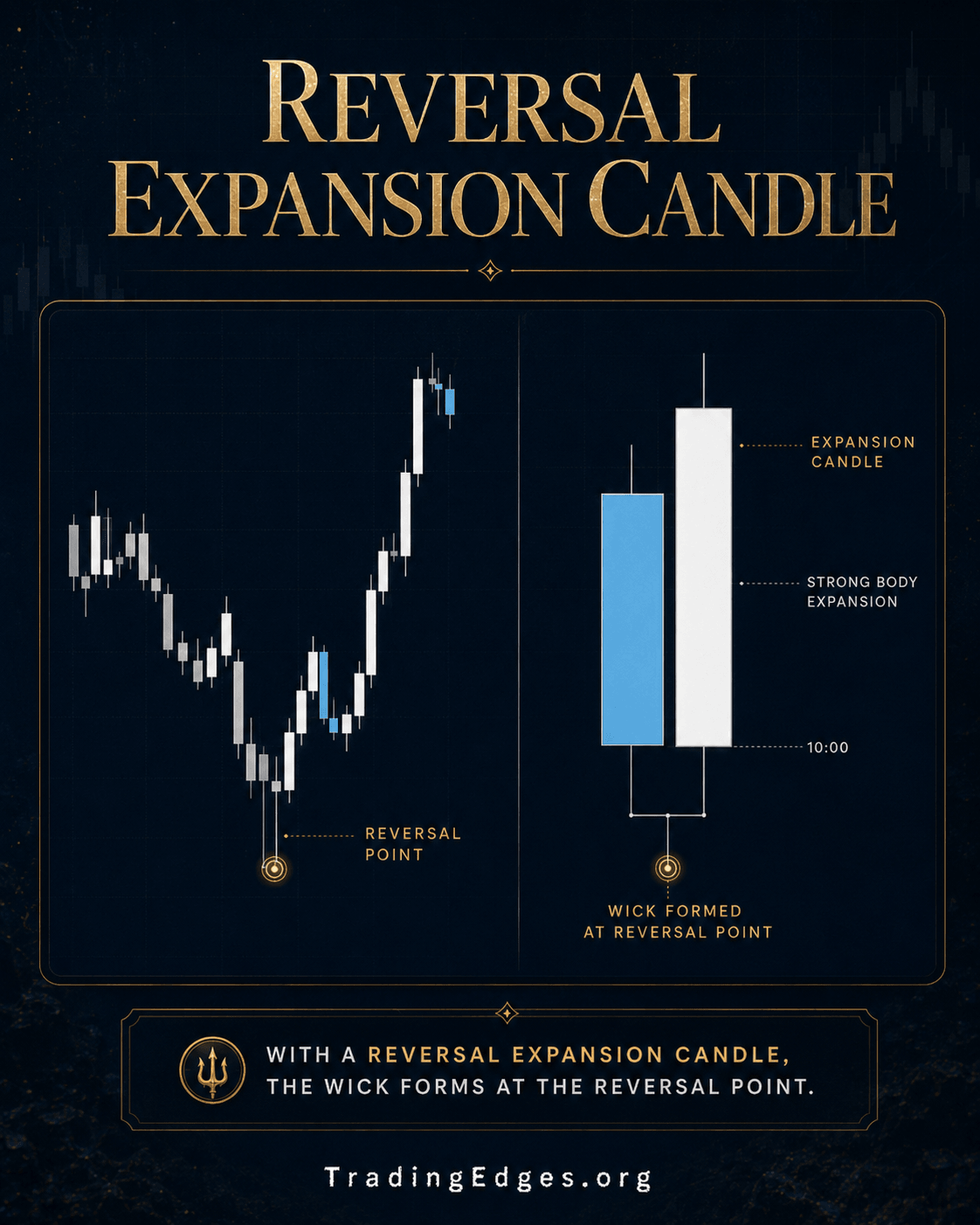
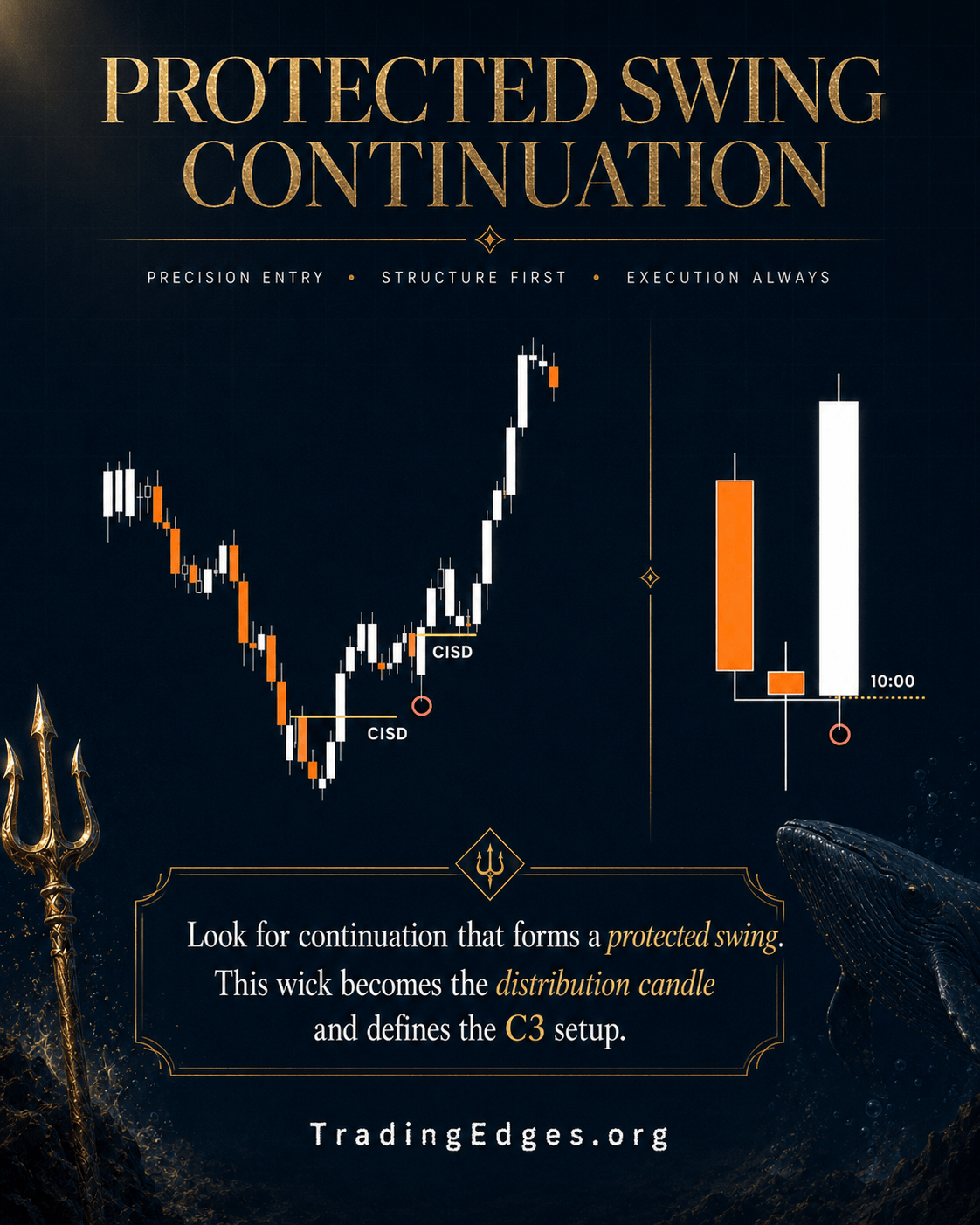
Manipulation: the false move. Once institutional positioning is sufficient, price pushes briefly in the WRONG direction to trigger retail stops. A bullish setup will see price spike down, breaking recent lows; a bearish setup will spike up, breaking recent highs. This is the liquidity grab funding the real move.
Distribution: the true directional move. Price reverses sharply from the manipulation extreme and trends in the institutional-favored direction, often for the entire remainder of the session.
PO3 on the daily candle
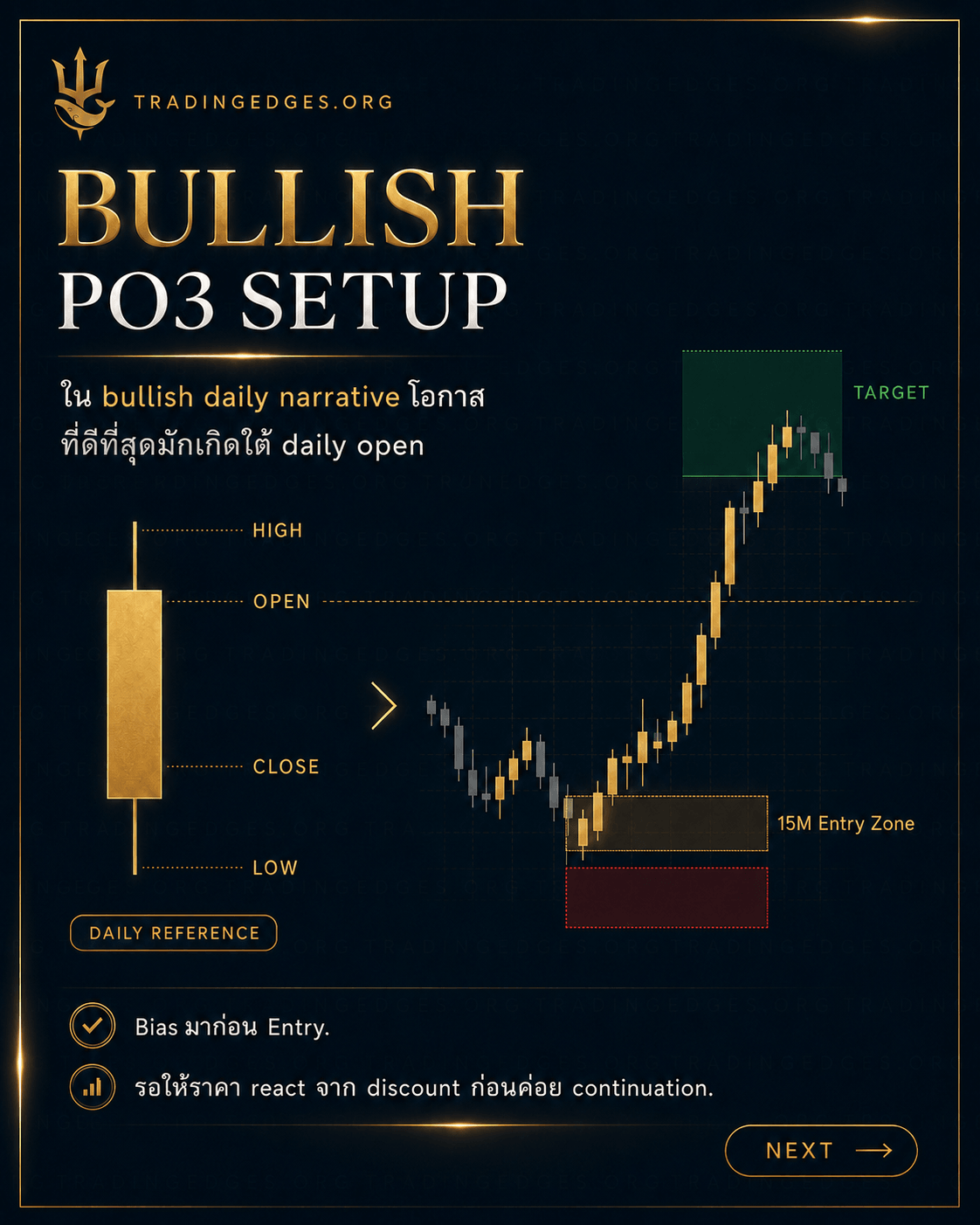
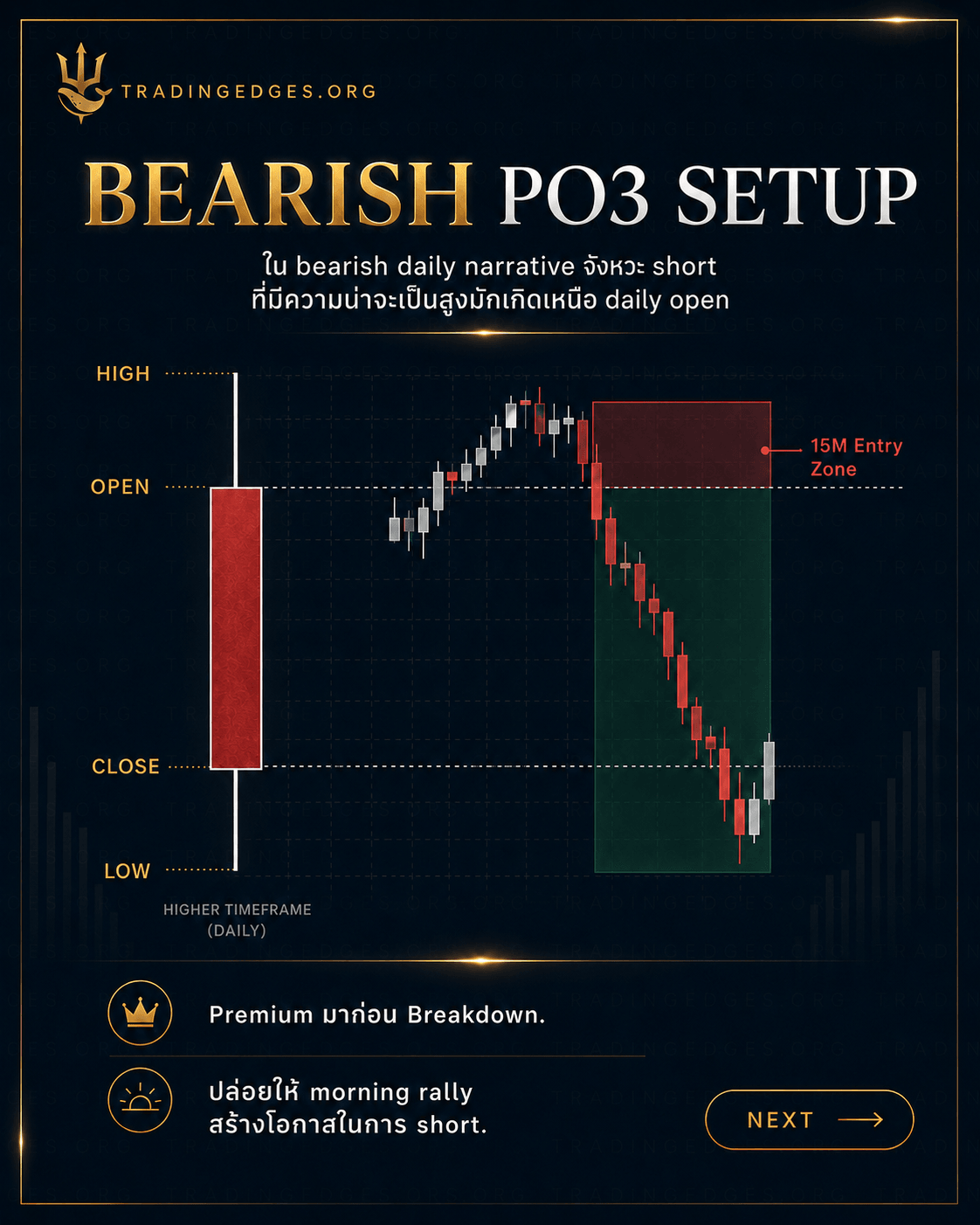
A single daily candle exhibits PO3 within itself. The open prints — that's Accumulation. The candle wicks one direction creating a session high or low — that's Manipulation. The candle then closes in the opposite direction of the manipulation wick — that's Distribution.
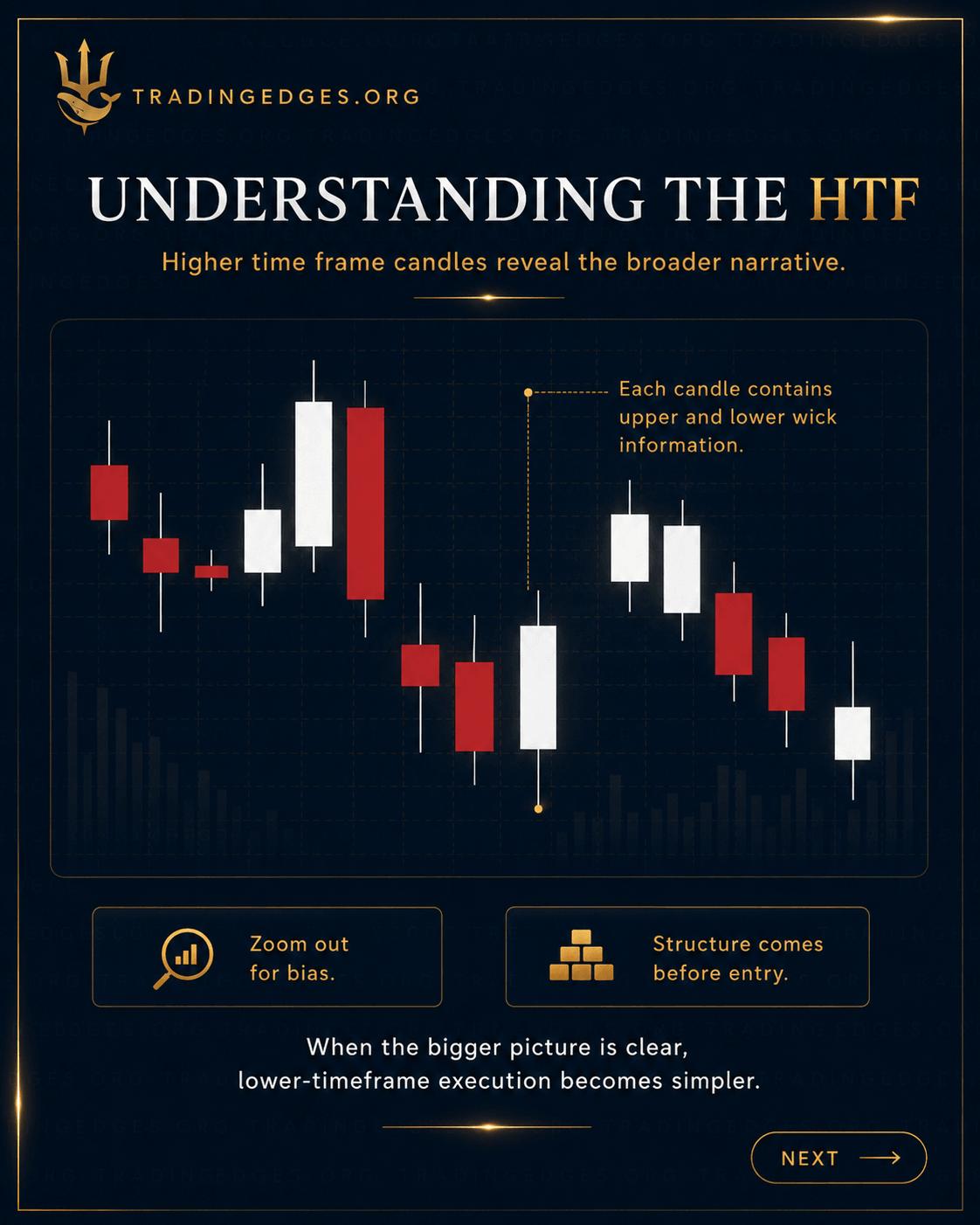
Professional traders read the daily PO3 to bias their intraday: if the daily candle's manipulation wick is to the upside (long upper wick), the daily bias is bearish. If the manipulation wick is to the downside, the daily bias is bullish. Trade in the distribution direction during the NY killzone for highest probability.
PO3 on intraday cycles
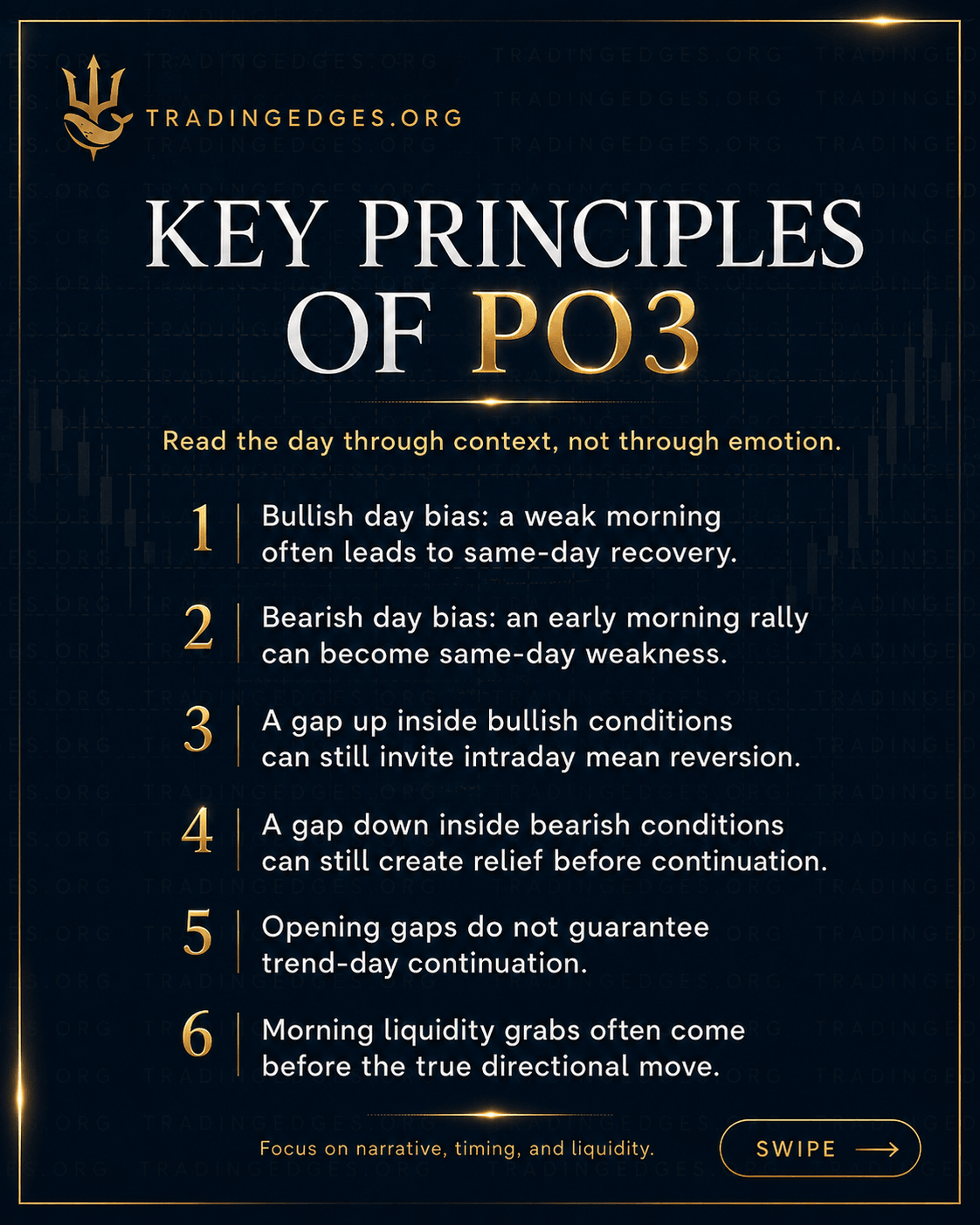
The same pattern repeats on shorter cycles. Asian session = accumulation (range). London open = manipulation (sweep of Asian high or low). London/NY = distribution (trend day toward the opposite direction of the sweep).
Learning to identify which phase you're in is one of the highest-leverage skills for intraday traders. Most retail traders are systematically trading the manipulation move (going short on a bearish-looking break of lows that's actually the sweep before a rally), then stopping out as the distribution begins.
- Trading every "break" — most are manipulation, not distribution
- No patience for the manipulation phase — entering before the sweep completes
- Ignoring daily PO3 bias and trading lower-timeframe noise against it
- Assuming PO3 repeats identically every day — context (news, week start/end) changes the pattern