
What is Liquidity Sweep / Liquidity Grab?
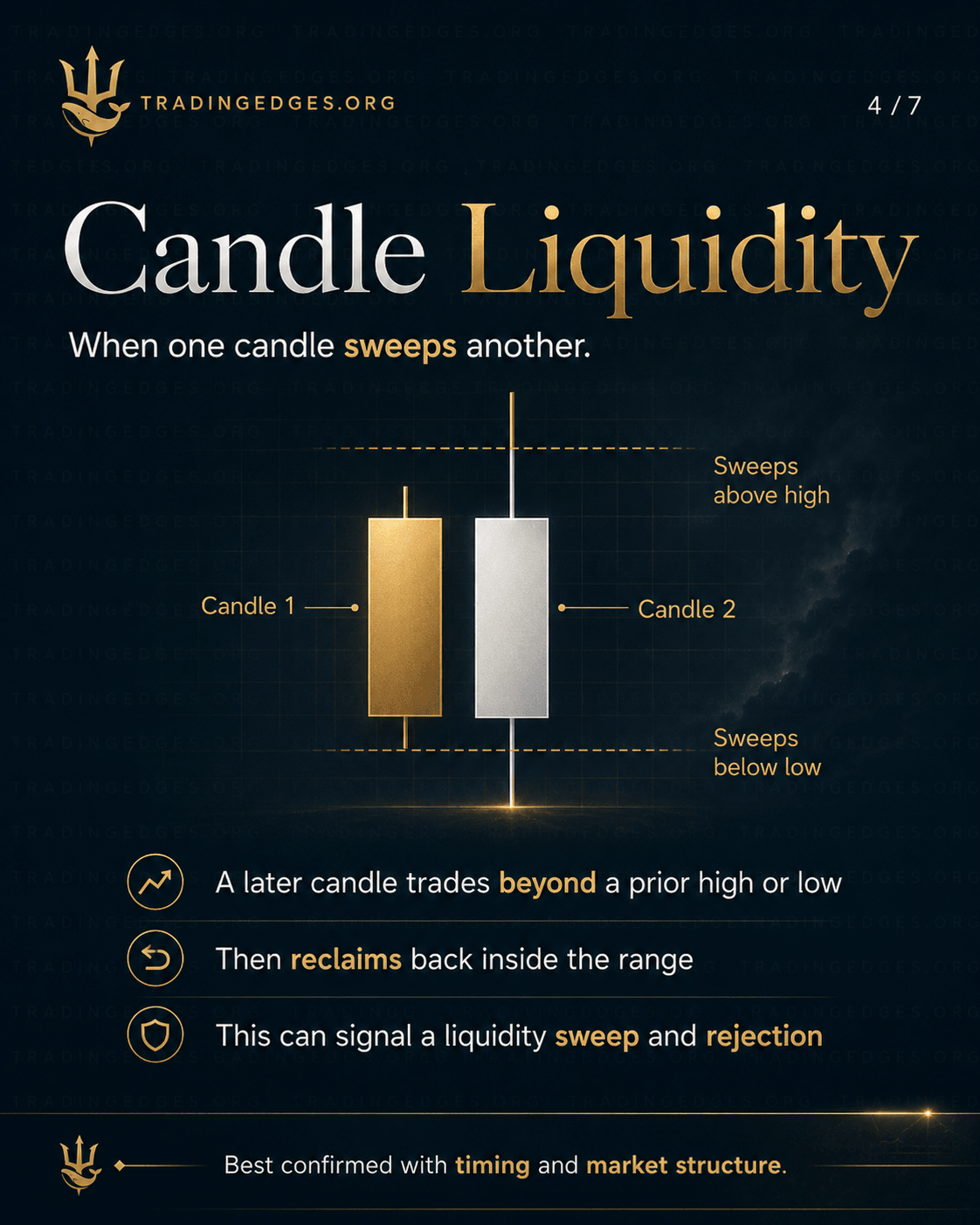
A move where price spikes past a visible swing high/low to trigger pending stop orders, then reverses sharply in the opposite direction.

Why liquidity sweeps happen
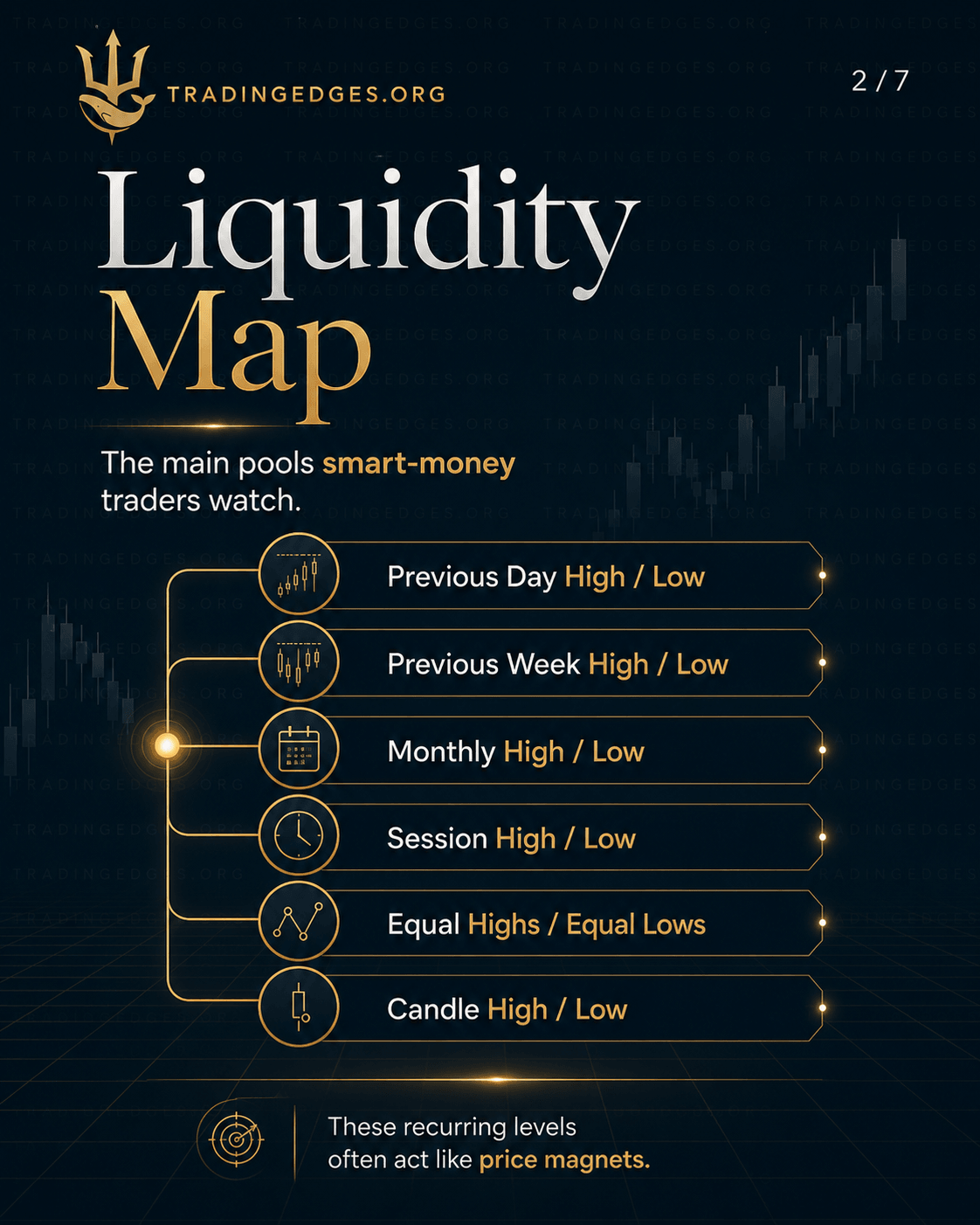
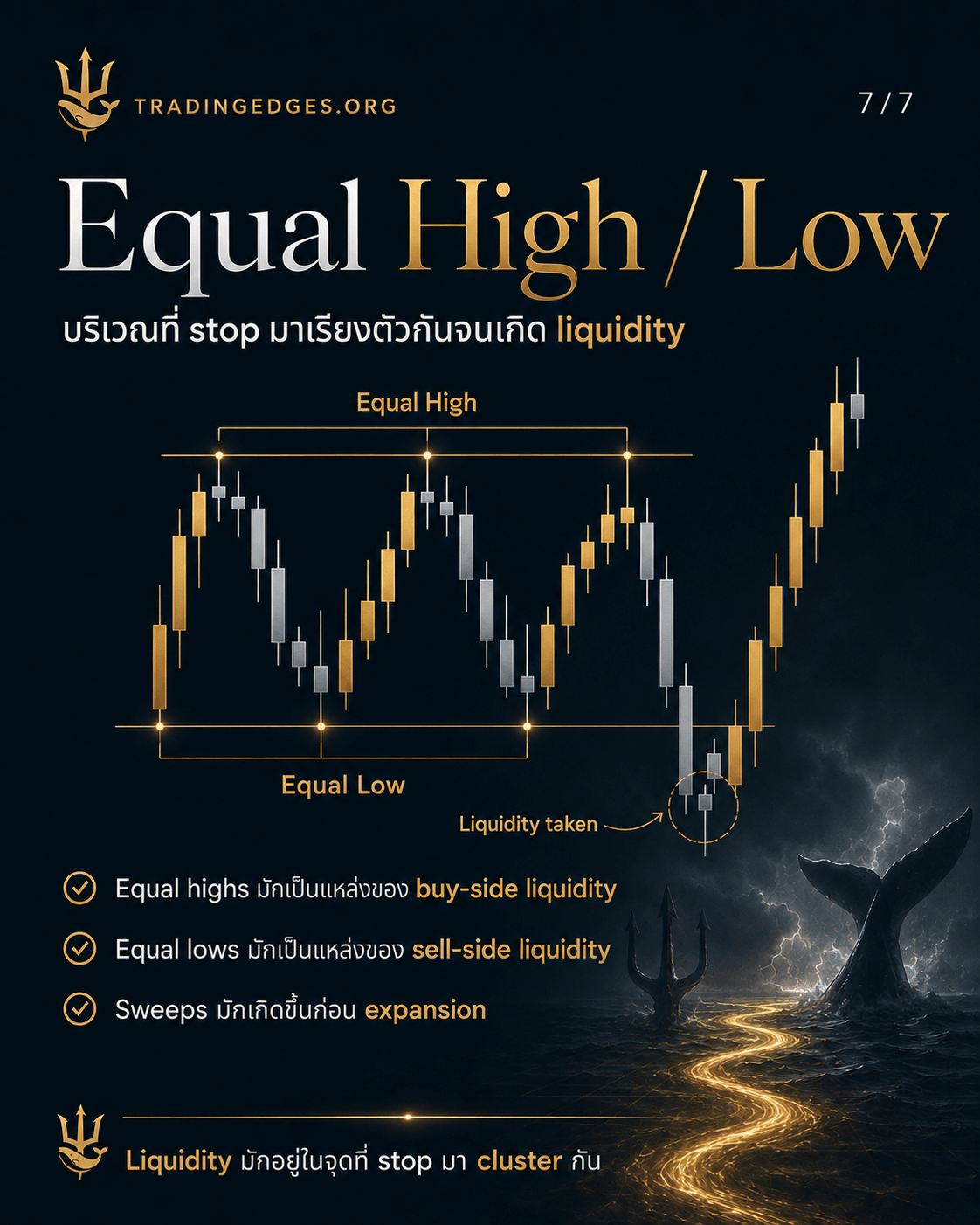
Stop-loss orders cluster predictably. Retail traders place stops just above visible swing highs (when short) or just below visible swing lows (when long). These pending stops are "liquidity" — meaning when triggered they become market orders providing fill for any large player who wants to enter the opposite side.
When a large participant wants to BUY a large position, they need sellers. Retail stops above a recent high provide exactly that — when price ticks up past the high, all the short-stops execute as buys (the broker buys to cover their shorts), feeding into the large participant's order. Then price reverses because the large position was filled and the original upward "sweep" was engineered, not organic.
What a clean sweep looks like
A textbook bullish sweep: price has been ranging or pulling back, makes a clear visible low, retraces upward, comes back down past that low (sweep), then reverses sharply within 1-3 candles and starts a multi-candle move upward. The reversal candle often has a long lower wick and a strong close — visible "rejection" of the sweep.
Bearish version: price reaches a clear high, retraces, comes back up past the high, then reverses down. Long upper wick, strong close down.
False signal: price sweeps the level but doesn't reverse — it keeps going. This means the sweep wasn't actually engineered; the move was genuine.
How to trade a sweep
Conservative approach: wait for the sweep, wait for price to close back inside the original range (closes above the swept low for bullish, below the swept high for bearish), then enter with stop just past the wick of the sweep candle. This avoids most fake reversals.
Aggressive approach: enter at the sweep level with a tight stop just beyond the sweep extreme. Higher RR but more whipsaw losses.
Best setups occur when the sweep happens at a higher-timeframe structural level (daily/weekly high or low) — institutional liquidity targets that produce strongest reversals.
- Entering before the reversal confirms — many "sweeps" don't reverse
- Stops too tight on aggressive entries → whipsaw out before the actual move
- Trading sweeps in chop / range-bound markets (no clear liquidity pool to grab)
- Ignoring session context — sweeps work best at London/NY open