
What is Sweep and Reclaim?
A two-step pattern: price sweeps liquidity past a swing point, then closes back through the swing level, signaling a high-probability reversal.
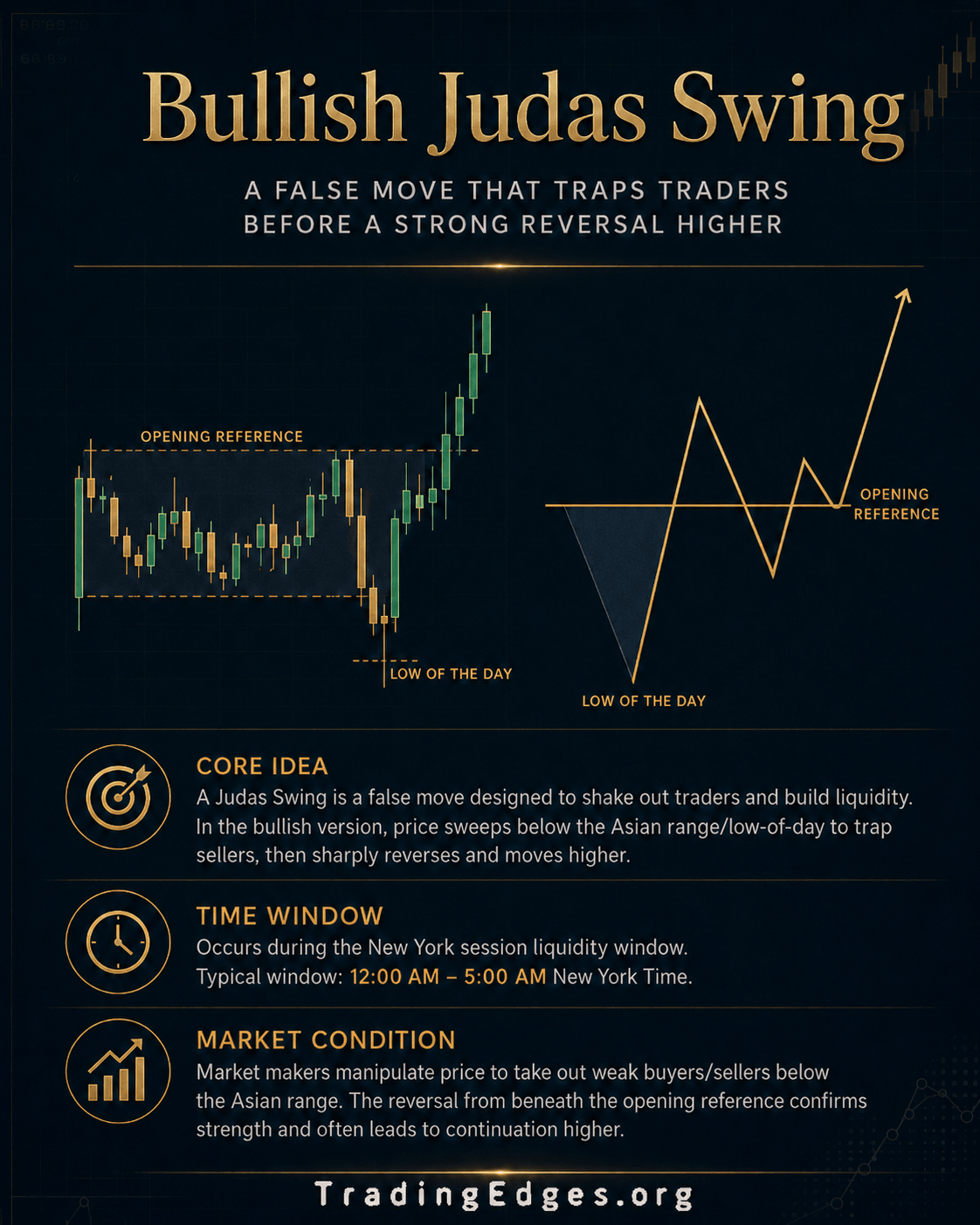
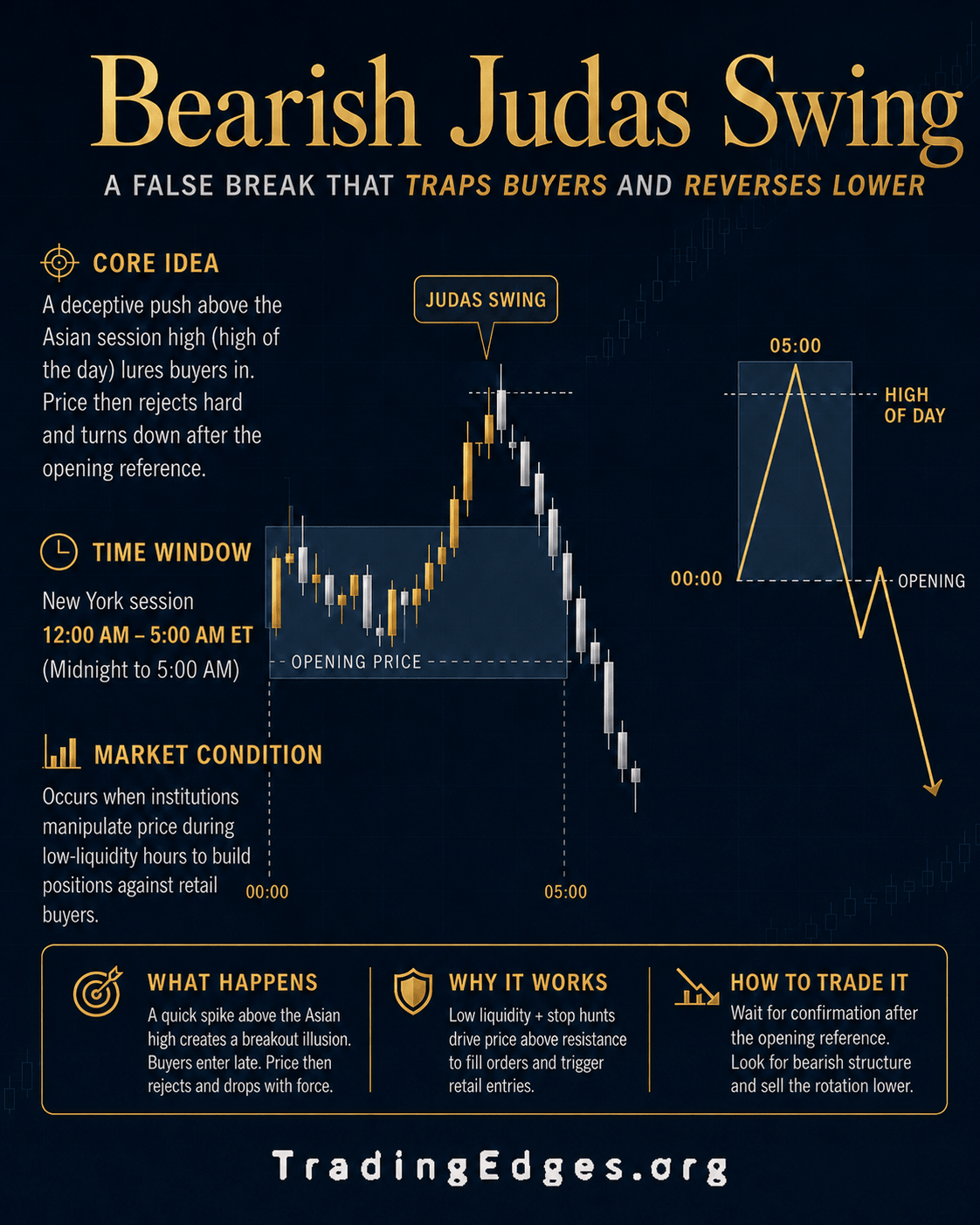
The two-step pattern
Step 1 — Sweep: price spikes past a clearly-visible swing high or low. Stops are triggered. Breakout traders enter the wrong direction. Liquidity is harvested.
Step 2 — Reclaim: within a few candles (often 1-5 candles), price closes back through the swing level. The breakout is confirmed false. The original direction's bias resumes.
Entry signal: the candle that closes back inside the original range. Stop: just past the sweep extreme. Target: the next major structural level in the new direction.
Why this works mechanically
The sweep extracts liquidity needed to fund a real institutional move. Once enough size is filled at the trapped breakout traders' expense, the real direction reveals itself. The "reclaim" candle is the market telling you the institutional flow is now active in the original (or counter-breakout) direction.
Without the reclaim, a sweep alone is not actionable — price may continue past the swept level. With the reclaim, the trap is confirmed and reversal probability rises sharply.
Higher-probability variants
Multi-confluence sweep-and-reclaim: the swing being swept is a higher-timeframe structural high/low (daily, weekly), AND the reclaim happens during a killzone (London or NY open), AND there's an FVG or Order Block in the direction of the reclaim. These setups have win rates well above 60% in backtested studies.
Low-probability variants: small swing point on a 5-minute chart, no killzone alignment, no broader confluence. These are coin flips at best — pass on them.
- Entering on the sweep before reclaim — many sweeps don't reverse
- Stop too tight on small reclaim candles → whipsaw
- Ignoring higher-timeframe context
- Forcing the pattern when it doesn't cleanly form